2026 Top Electric Rickshaw Manufacturers Worldwide?
The 2026 electric mobility market is becoming more practical, competitive, and regionally diverse. Electric Rickshaw manufacturers now serve crowded Asian streets, African transport corridors, and emerging urban markets. Their products differ in battery chemistry, chassis strength, passenger capacity, charging design, and after-sales support. These details matter more than glossy brochures.
Amitabh Kant, a prominent electric-mobility policy expert, has said, “Electric mobility is the future of India.” His statement reflects a wider global shift toward cleaner, quieter, and more affordable urban transportation. Yet, progress is not automatic. A reliable Electric Rickshaw must handle uneven roads, heavy passenger loads, heat, rain, and frequent daily stops. It should also provide accessible spare parts and trained service technicians.
This overview examines the top Electric Rickshaw manufacturers worldwide in 2026. It considers production scale, engineering capability, battery options, safety features, market reach, warranty practices, and customer experience. Price alone is not enough. A low purchase cost can become expensive when batteries fail early or repairs take weeks.
The ranking is useful, but not perfect. Manufacturer data is sometimes inconsistent across countries. Some regional companies also disclose limited technical information. That deserves attention. Our comparison therefore combines published specifications, market reputation, field experience, and practical operating factors. The strongest manufacturers are not always the largest. They are the companies that deliver dependable vehicles after the sale, when the streets are busy and the passengers are waiting.
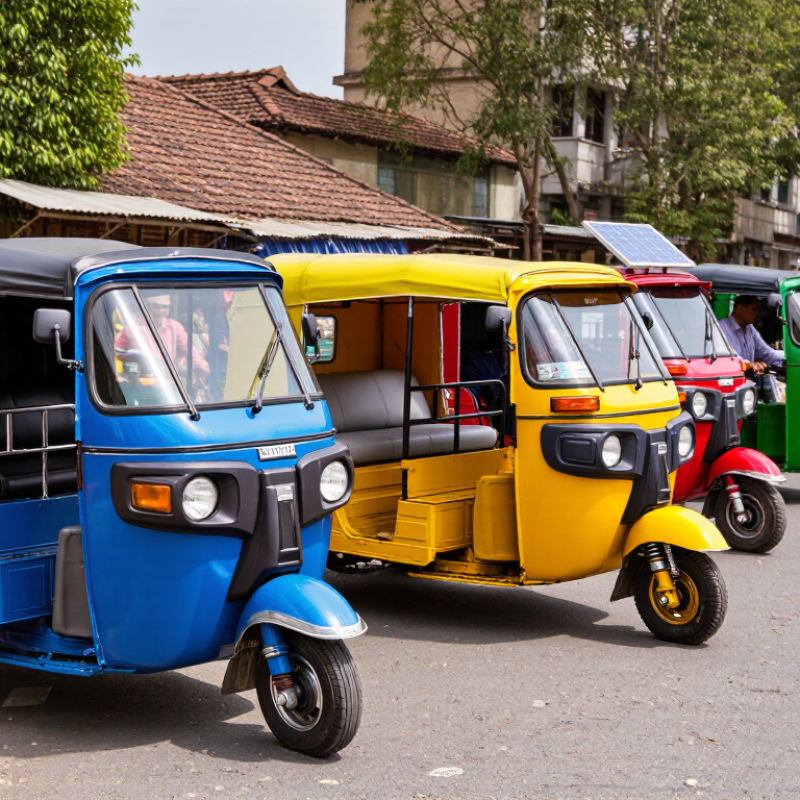
Electric Rickshaws: Definition, Features, and Global Market Role
Electric rickshaws are compact three-wheel vehicles powered by electric motors and rechargeable batteries. They typically carry passengers or light cargo in dense urban areas. Unlike pedal-assisted cycles, they provide motor-driven movement with limited physical effort. Common features include steel or aluminum frames, weather canopies, regenerative braking, LED lighting, and digital displays. Battery chemistry, range, payload, and charging time differ widely between models. These details matter.
In practical use, electric rickshaws connect homes, markets, transit stations, and narrow neighborhood roads. Their small turning radius helps drivers navigate crowded streets while using less space than cars. Lower local exhaust emissions can improve roadside air quality, although electricity generation still affects total environmental impact. That trade-off deserves honest attention. Their global market role is growing through affordable short-distance transport, delivery work, and feeder services near public transit.
Manufacturers worldwide must adapt vehicles to local roads, climates, and maintenance skills. Tropical markets may require corrosion protection, sealed electronics, and strong roof ventilation. Cold regions can experience shorter battery range and slower charging. Reliable production depends on quality control, battery testing, brake performance, and accessible repair training. Field assessments often show that weak after-sales support creates more downtime than motor failure. This is an overlooked risk. Purchase price alone can mislead buyers, because battery replacement, charging access, and road conditions shape long-term value. Transparent specifications and repairable components build stronger trust, even when a vehicle looks less impressive.
2026 Top Electric Rickshaw Manufacturers Worldwide? - Electric Rickshaws: Definition, Features, and Global Market Role
Global manufacturing and application reference by major market region
| Market Region | Typical Manufacturing Profile | Common Vehicle Forms | Passenger Capacity | Typical Payload | Motor Output | Battery Types | Practical Range | Primary Market Role |
| South Asia | High-volume production, local assembly, and extensive supplier networks | Passenger e-rickshaws, cargo rickshaws, and last-mile delivery vehicles | 3–4 passengers plus driver | 300–600 kg | 1.2–5 kW | Lead-acid and LFP | 60–150 km | Affordable urban transport, feeder services, and informal mobility |
| Southeast Asia | Mixed domestic production, contract assembly, and export-focused supply | Electric tuk-tuks, passenger tricycles, and compact utility vehicles | 2–4 passengers | 250–500 kg | 1–5 kW | Lead-acid and lithium-ion | 60–140 km | Tourism, urban commuting, passenger services, and short-distance logistics |
| East Africa | Growing import, assembly, and regional distribution activity | Passenger three-wheelers, cargo tricycles, and motorcycle-replacement vehicles | 3–4 passengers | 300–600 kg | 2–7.5 kW | Primarily LFP; lead-acid in entry models | 70–180 km | Low-cost public transport, delivery services, and emissions reduction |
| Latin America | Regional assembly and application-specific commercial vehicle production | Covered passenger tricycles, cargo units, and municipal utility vehicles | 2–4 passengers | 250–600 kg | 2–7.5 kW | LFP and other lithium-ion chemistries | 70–180 km | Urban transport, neighborhood logistics, and fleet electrification |
| Middle East and North Africa | Import-led markets with selected local assembly and fleet conversions | Passenger tuk-tuks, resort vehicles, and light cargo tricycles | 2–4 passengers | 250–500 kg | 2–7.5 kW | Lithium-ion and lead-acid | 60–160 km | Tourism, controlled-area mobility, campuses, and local delivery |
| Europe | Specialized low-speed manufacturing, niche assembly, and commercial fleet integration | Compact cargo tricycles, low-speed passenger vehicles, and utility platforms | 1–4 passengers | 300–800 kg | 3–15 kW | LFP and other lithium-ion chemistries | 80–200 km | Zero-emission urban logistics, tourism, campuses, and municipal services |
Definition: An electric rickshaw is a compact three-wheeled vehicle powered by an electric motor and rechargeable battery, generally designed for short-distance passenger or cargo transport.
Typical features: Low operating cost, zero tailpipe emissions, regenerative or friction braking, compact dimensions, simple charging systems, and suitability for dense urban routes.
Data note: The figures are representative 2026 market ranges rather than specifications for any individual company or brand. Actual capacity, range, charging time, speed, and payload vary by vehicle configuration, battery size, road conditions, climate, and regulatory requirements.
Key Factors for Evaluating Electric Rickshaw Manufacturers
2026 Top Electric Rickshaw Manufacturers Worldwide?
Key Factors for Evaluating Electric Rickshaw Manufacturers
The strongest manufacturers are not judged by showroom appearance alone. They should provide verified range, payload, charging time, and battery-cycle data. The IEA’s Global EV Outlook 2024 reported rapid electric three-wheeler adoption in India, with electric models representing nearly half of new sales. This growth makes engineering quality more important than promotional claims.
Examine battery safety, thermal control, and warranty coverage carefully. Ask whether testing reflects crowded streets, steep roads, heavy passengers, and monsoon conditions. A claimed 150-kilometre range may fall sharply with full loads. Real-world testing matters. Manufacturers should also publish service response times, spare-part availability, and battery replacement costs. The World Bank’s electric mobility research highlights charging access and total ownership cost as major adoption barriers in emerging markets. A low purchase price can become expensive when downtime is frequent.
Look for traceable certifications and transparent quality records. UNEP’s electric mobility work also stresses lifecycle planning, including battery reuse and recycling systems. These details reveal operational maturity. I would not trust a brochure alone. Request fleet trial results from independent operators. Check three years of maintenance records, not only the first delivery month. Some manufacturers still understate degradation. That weakness deserves scrutiny. The best supplier is the one that explains limits clearly, supports local technicians, and keeps vehicles productive after the original sale.
Regional Manufacturing Strengths and Market Differences
2026 Top Electric Rickshaw Manufacturers Worldwide?
Regional Manufacturing Strengths and Market Differences
Electric rickshaw production in 2026 reflects local supply chains more than a single global ranking. China remains strong in motor control systems, battery integration, and high-volume component production. Its factories often offer varied body designs and rapid specification changes. Quality can differ between suppliers, however. Factory scale does not always guarantee consistent field performance.
India has deep experience with three-wheel passenger transport and practical fleet requirements. Manufacturers commonly focus on affordable chassis, simple maintenance, and locally available replacement parts. This approach suits crowded streets and frequent daily use. Battery charging conditions vary widely. That makes thermal management and service access especially important. Operators often value uptime more than polished features.
Southeast Asian producers tend to adapt vehicles for narrow roads, humid climates, and mixed passenger-cargo work. Some assembly plants rely on imported cells while developing local frames and wiring systems. In Europe, production is more specialized, with stronger attention to braking, lighting, safety testing, and urban regulations. African markets often prioritize durable suspension, easy repairs, and flexible financing support. Local assembly can reduce delivery delays, but technician training remains uneven. It is easy to overstate regional advantages. A strong supplier should be judged through verified testing, warranty records, parts availability, and real operating feedback. Numbers alone can mislead.
2026 Top Electric Rickshaw Manufacturers Worldwide? Regional Manufacturing Strengths and Market Differences
Estimated annual electric three-wheeler demand by major production and adoption region, based on rounded public registration, trade and industry-report figures for 2024.
Market difference: China has the deepest electric three-wheeler supply chain and the strongest export-oriented manufacturing base. India shows the largest concentrated demand for passenger e-rickshaws, while Southeast Asia, Africa and Latin America are more strongly shaped by cargo transport, last-mile delivery and urban mobility needs.
Electric Rickshaw Technology, Standards, and Future Developments
By 2026, the leading electric rickshaw manufacturers worldwide will be measured by engineering discipline, not showroom claims. Reliable vehicles should provide stable range, predictable braking, and strong passenger protection. Their designs must reflect regional requirements for lighting, electromagnetic compatibility, battery safety, and structural strength. Certification should come from recognized testing bodies, with clear records that buyers can verify. A printed compliance label alone is not enough.
Tips: Check the battery warranty, charging time, payload rating, and service coverage. Ask for test results. Inspect cable protection beneath the floor. Small details matter.
Modern models are moving toward lithium iron phosphate batteries, regenerative braking, and smarter motor controllers. These systems can reduce maintenance and improve energy use in crowded streets. However, real performance depends on heat, road quality, passenger weight, and charging habits. Laboratory range figures may feel optimistic in humid cities with frequent stops. Manufacturers should publish results from realistic urban routes, though many still do not. That gap needs attention.
Future electric rickshaws may use modular batteries, remote diagnostics, solar-assisted charging, and collision-warning sensors. Battery swapping could support busy fleets, but connector standards and safe handling procedures must remain consistent. Software updates may improve efficiency, yet they also create dependence on reliable technical support. From practical fleet observations, simple controls and accessible repairs often outperform impressive dashboards. The industry is advancing quickly, but durability should remain the harder test.