Top 10 Benefits of Using ISO Containers for Shipping and Storage Solutions
ISO containers have revolutionized the shipping and storage industries, providing a standardized solution that enhances efficiency and security in global trade. According to a report by the International Maritime Organization, more than 90% of the world’s goods are transported by sea, and ISO containers play a pivotal role in this process. Their design allows for easy handling and stacking, which significantly reduces shipping costs and transit times. Experts predict that the widespread adoption of ISO containers will continue to grow, reflecting an estimated annual growth rate of 4.2% in container shipping through 2028.
Dr. Emily Chen, a leading expert in container logistics, highlights the transformative impact of ISO containers, stating, “The implementation of ISO containers has not only standardized shipping practices but also dramatically improved the handling efficiency in ports worldwide.” This assertion underlines the importance of these containers in the current economic climate as businesses increasingly seek solutions that enhance supply chain resilience. The adoption of ISO containers for storage and shipping not only caters to the logistics industry's demand for reliability but also aligns with global sustainability goals by minimizing waste and maximizing space utilization. Overall, the benefits of using ISO containers extend beyond mere logistics, offering significant advantages that empower businesses to thrive in a competitive landscape.
Advantages of Durability and Weather Resistance in ISO Containers
ISO containers, also known as shipping containers, are widely recognized for their exceptional durability and weather resistance, making them a preferred choice for shipping and storage solutions across the globe. According to a report by the International Organization for Standardization (ISO), these containers are designed to withstand harsh environmental conditions, ranging from extreme heat to heavy rain and snow.
The materials used in their construction, typically corten steel, provide rust resistance and structural integrity, allowing ISO containers to remain intact while exposed to the elements over time. This resilience not only prolongs the lifespan of the containers but also reduces the need for frequent replacements, which can significantly lower operational costs for businesses.
Moreover, the superior weather resistance of ISO containers is evidenced by industry studies that show they can maintain their contents safe from moisture and contamination. A survey by the Container Owners Association revealed that approximately 90% of cargo damage during transit is due to environmental factors. By utilizing ISO containers, companies can significantly mitigate these risks, ensuring that goods arrive at their destinations in optimal condition.
Additionally, with proper insulation options available, these containers can be adapted for temperature-sensitive cargo, further enhancing their versatility as a shipping and storage solution. The ability to provide a secure and stable environment for various types of goods underscores the immeasurable benefits of incorporating ISO containers into shipping logistics.
Cost-Effectiveness of ISO Containers for Long-Term Shipping Needs
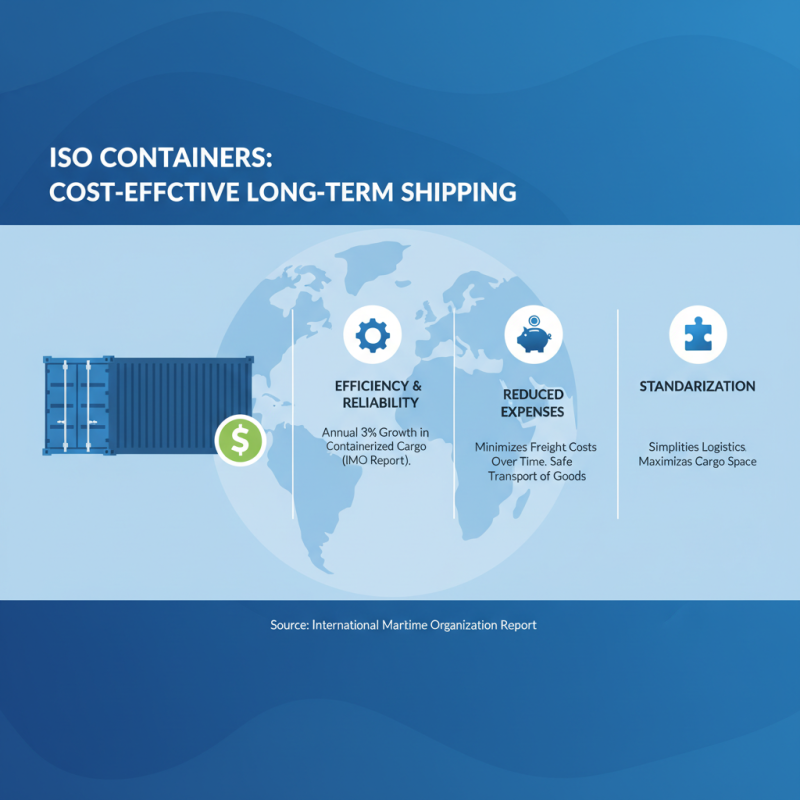
The cost-effectiveness of ISO containers for long-term shipping needs is a pivotal factor driving their widespread adoption across various industries. According to a report by the International Maritime Organization, the shipping industry has seen an annual growth of approximately 3% in containerized cargo around the globe. This trend underscores the reliability and efficiency that ISO containers offer, allowing businesses to reduce shipping expenses while ensuring the safe transport of goods. The standardization of container sizes not only simplifies logistics but also maximizes cargo space utilization, translating to significant savings in freight costs over time.
Additionally, a study from the International Council on Shipping highlights that using ISO containers can result in up to a 20% reduction in transportation costs compared to traditional shipping methods. Their durability and weatherproof design mean that they can withstand harsh conditions without incurring damage, further lowering the total cost of ownership. As companies increasingly seek sustainable solutions, the longevity of ISO containers, which can be reused for multiple shipping cycles, enhances their appeal as a financially savvy choice for long-term storage and shipping. Overall, the economic advantages of using ISO containers contribute to their status as a preferred solution in global logistics and supply chain management.
Space Efficiency: Maximizing Storage Potential with ISO Containers
ISO containers have revolutionized the shipping and storage industry, primarily through their exceptional space efficiency. The standardized dimensions of these containers (typically 20 and 40 feet long) allow for optimal stacking and transportation, significantly reducing the amount of wasted space during transit. According to a report by the International Maritime Organization, nearly 90% of global trade is carried out by sea, and the effective use of ISO containers in this sector leads to a reduction in overall shipping costs, which can be as much as 15% when compared to traditional methods. This efficiency is crucial as logistics costs can account for up to 10% of a company's total expenditures.
In addition to cost savings, ISO containers contribute to maximizing storage potential in various environments. Their uniform size means they can be easily accommodated in warehouses, ports, and distribution centers, enabling businesses to better utilize their available space. A study from the Warehousing Education and Research Council found that maximizing vertical space with stacked ISO containers can increase storage capacity by up to 30%. Furthermore, the modular nature of these containers allows for easy repurposing and reconfiguration, catering to changing inventory needs without the substantial capital investment typically associated with fixed storage solutions. As companies strive to improve their logistics efficiency, the role of ISO containers in enhancing spatial utilization has never been more critical.
Top 10 Benefits of Using ISO Containers for Shipping and Storage Solutions - Space Efficiency: Maximizing Storage Potential with ISO Containers
| Benefit |
Description |
Space Efficiency |
Sustainability |
| 1. Standardized Sizes |
ISO containers come in standard dimensions, allowing for consistent stacking and storage. |
Maximizes available vertical and horizontal space. |
Promotes efficient use of materials. |
| 2. Modular Design |
Containers can be easily adapted for various uses in storage solutions. |
Facilitates custom configurations to optimize space. |
Reusable for various applications, reducing waste. |
| 3. Durability |
ISO containers are designed to withstand harsh conditions. |
Reduces the need for frequent replacement, saving space in storage. |
Long lifespan contributes to environmental sustainability. |
| 4. Security |
Containers are designed with security features, protecting contents. |
Secure stacking minimizes the footprint of stored goods. |
Reduces risk of spoilage or loss, enhancing operational efficiency. |
| 5. Cost-Effectiveness |
Lower shipping and storage costs due to efficiency and durability. |
Maximizes space utilization, lowering overall costs. |
Reduced resource usage translates to lower environmental impact. |
| 6. Versatility |
Can be used for shipping various goods and for temporary storage solutions. |
Easily adapts to different storage needs. |
Flexibility in reuse reduces the need for additional storage structures. |
| 7. Easy Transportation |
Designed for seamless transport across different modes (ship, truck, train). |
Optimizes logistics and space during transport. |
Supports greener transport options by promoting optimal load capacity. |
| 8. Customization |
Containers can be modified for specific storage needs (e.g., refrigeration). |
Can be tailored to specific organizational requirements. |
Promotes efficient use of energy for specialized storage. |
| 9. Weather Resistance |
Built to withstand adverse weather conditions. |
Enables the storage of goods in any climate. |
Long-term durability minimizes waste. |
| 10. Global Accessibility |
Widely recognized and used internationally for shipping and storage. |
Facilitates international trade and storage. |
Streamlined processes contribute to global sustainability efforts. |
Versatility in Transportation: Adaptability of ISO Containers Across Industries
ISO containers, widely recognized for their robust construction and standardization, offer unparalleled versatility in transportation solutions across various industries. Their adaptability stems from a consistent size and structure, allowing seamless integration into shipping, rail, and road transport systems. This uniformity not only simplifies logistics but also enhances efficiency, as different modes of transport can easily interchange these containers without the need for additional packing or handling. As a result, businesses can optimize their supply chain processes, reducing transit times and costs while ensuring that goods are safely secured during transport.
Moreover, the versatility of ISO containers extends beyond traditional shipping. They can be customized for various functions, ranging from storage solutions to mobile offices and even pop-up retail spaces. Industries such as construction, agriculture, and food services are increasingly leveraging ISO containers for their flexibility. For instance, builders use modified containers as on-site storage units for tools and materials, while restaurants transform them into trendy dining spaces. This multifunctionality not only mitigates the need for extensive infrastructure but also supports an environmentally sustainable approach by repurposing these durable containers in innovative ways. Through their adaptability, ISO containers continue to revolutionize how goods are transported and utilized across diverse sectors.
Top 10 Benefits of Using ISO Containers for Shipping and Storage Solutions
This chart illustrates the top benefits of using ISO containers across various industries, highlighting their versatility and adaptability in transportation and storage solutions.
Environmental Sustainability: Eco-Friendly Features of ISO Containers
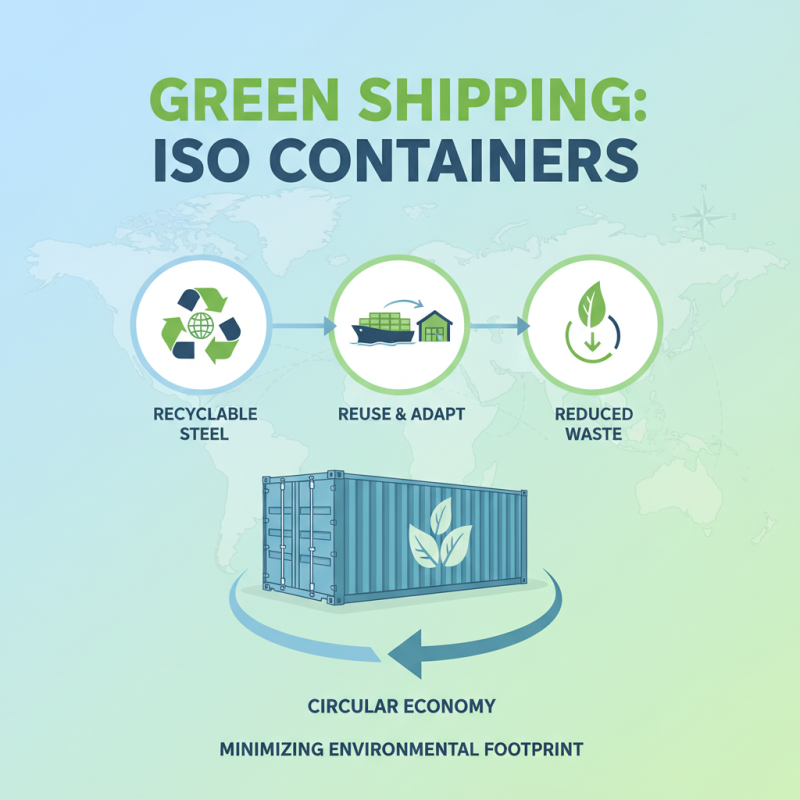
ISO containers have emerged as a pivotal solution in the realm of shipping and storage, particularly due to their environmentally sustainable features. These containers are predominantly manufactured using steel, a material that is not only durable but also recyclable. Once a container has reached the end of its operational life, it can be repurposed or recycled, thereby reducing waste and promoting a circular economy. This characteristic of ISO containers substantially minimizes their environmental footprint in comparison to single-use packaging options.
Furthermore, the design of ISO containers facilitates efficient transportation, which contributes to reduced carbon emissions. Their standardization allows for optimized stacking and loading, enabling ships, trucks, and trains to maximize capacity and minimize trips. This enhanced efficiency translates to lower fuel consumption and greenhouse gas emissions. Additionally, ISO containers are frequently used for shipping goods that need temperature control, and many of these containers are now equipped with energy-efficient technologies, such as solar panels, which further decrease their environmental impact. By leveraging such eco-friendly features, ISO containers represent a significant step toward more sustainable shipping and storage practices.