
Is Your Container Ready?

Get In Contact With Us Today

Is Your Container Ready?

Get In Contact With Us Today

2026 How to Choose the Right Conex Container for Your Needs?

Choosing the right conex container can significantly impact your logistics and storage efficiency. In 2022, the global conex container market was valued at approximately $8.5 billion. This figure is expected to rise, driven by increased demand in construction and shipping sectors. Understanding this growing market is essential.

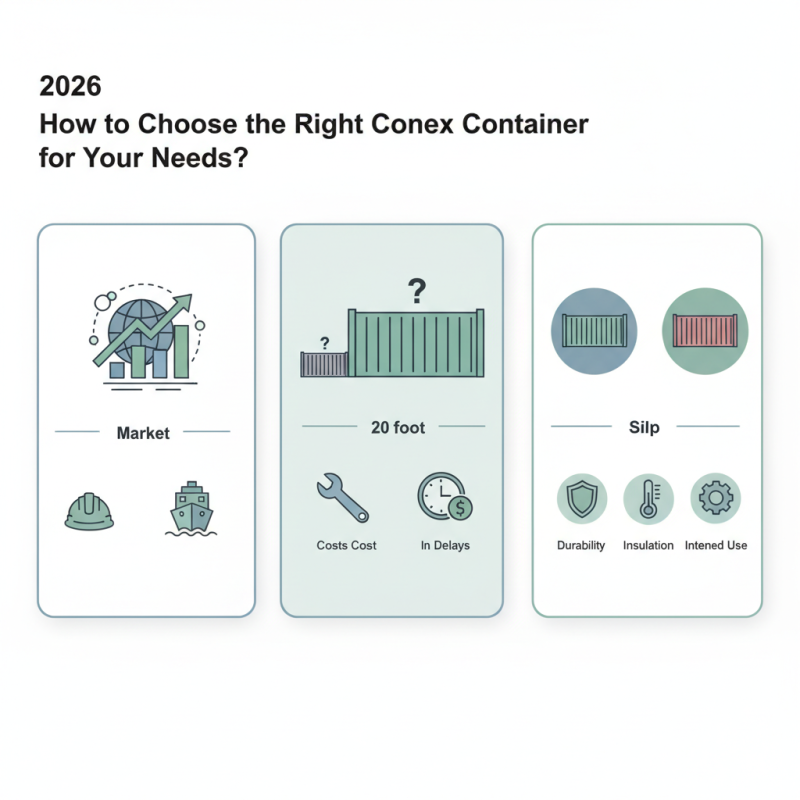
Conex containers come in various sizes and conditions. Selecting the wrong type can lead to inefficiencies. For example, a standard 20-foot container may not suffice for larger projects. Inadequate space can lead to additional costs and delays. Some users overlook these details, resulting in poor decisions.

Moreover, not all containers are created equal. New and used options have distinct advantages. It's crucial to assess your specific needs before making a purchase. Industry professionals recommend considering factors like durability, insulation, and intended use. A well-chosen conex container can enhance your operations significantly.
2026 How to Choose the Right Conex Container for Your Needs?

Understanding Different Types of Conex Containers Available in 2026

When selecting the right conex container, understanding the various types available is crucial. There are standard containers, which are great for general storage. They are widely used for transporting goods. Then, there are high cube containers. These provide additional vertical space, suitable for taller items. If you need to transport temperature-sensitive goods, refrigerated containers are the answer. They maintain a stable internal temperature. However, they require a power source, which can be a concern.

Specialty containers exist too. You might find containers modified for specific uses, like office spaces or workshops. These can be a bit more complex, and you’ll need to think about insulation and lighting. There are also double-door containers that allow for easy access from both sides. Each type has its advantages and drawbacks.

Choosing the right container can feel overwhelming. It's essential to think about what you actually need. Consider the volume and type of goods you intend to store or transport. Look at factors such as portability and security. Sometimes, the container that looks perfect may not meet your practical needs. Reflecting on these details is vital for the best choice.
Assessing Your Storage and Transport Needs for Conex Containers

2026 How to Choose the Right Conex Container for Your Needs?

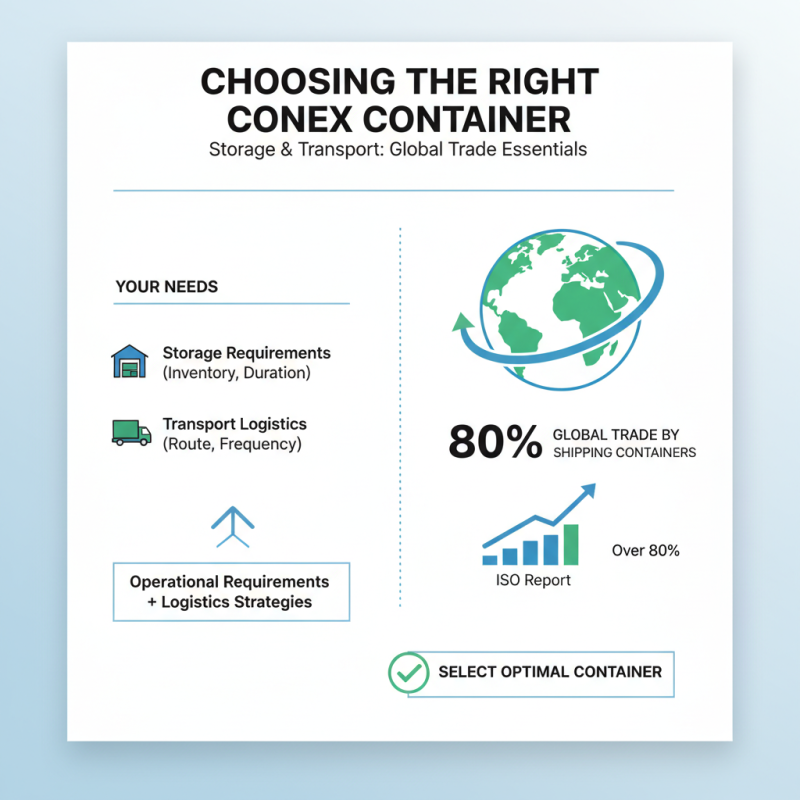
When it comes to selecting the right Conex container, understanding your storage and transport needs is crucial. The International Organization for Standardization (ISO) reports that over 80% of global trade is transported via shipping containers. This statistic underscores the importance of choosing a container that suits both your operational requirements and logistics strategies.

Assess your project requirements. How much space do you need? Containers come in various sizes, typically 20-foot and 40-foot options. Weight capacity is another aspect to consider. A standard 40-foot container can hold up to 30,480 kilograms. If you plan to transport heavy machinery or materials, ensure the container meets these capacity standards.

Think about accessibility. Some containers have features like side doors for easier loading. However, not all containers provide this option. Research indicates that a lack of planning can lead to inefficient operations, costing businesses significant time and resources. Is your choice flexible enough to adapt to changing needs? The wrong container could lead to regrets down the line. Reflect on these factors carefully.

Key Features to Consider When Selecting a Conex Container

2026 How to Choose the Right Conex Container for Your Needs?

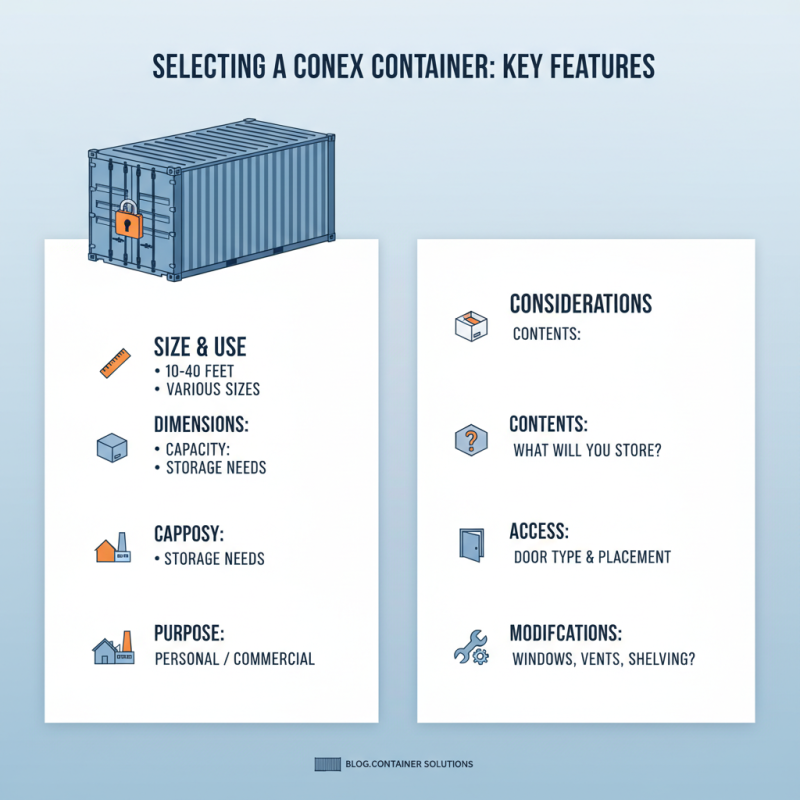
When selecting a Conex container, key features play a crucial role. Start by considering the size. Containers come in various dimensions, typically ranging from 10 to 40 feet. Think about what you need to store. Will it be for personal use or commercial purposes?

Next, pay attention to the condition of the container. Newer containers offer better security and insulation. However, used containers can be cost-effective. Inspect for rust or damage. Sometimes, sellers may not disclose flaws. Always ask for detailed images or a physical inspection.

Don’t forget about accessibility. Consider door configurations. Some may fit your needs better than others. Additionally, inquire about available modifications. Could you add windows or vents? These modifications might improve functionality. Reflect on your long-term needs. Storage solutions should evolve with your requirements over time.

Evaluating Budget and Cost Implications of Conex Containers

When considering a Conex container, evaluating your budget is essential. Prices can vary significantly based on size and condition. A new container will cost more, while used options provide savings. However, used containers may require maintenance. Weighing immediate savings against long-term needs is important.

Additionally, consider the delivery costs. Transportation fees can add up quickly. Assessing your location and accessibility will help avoid unexpected expenses. Sometimes, a lower initial price can lead to higher overall costs. Prepare for potential repairs if you choose a used option.

Think about your specific requirements as well. Are you storing equipment, inventory, or personal items? Different uses may demand varying container specifications. Rushing this decision could lead to overspending or choosing the wrong size. Each aspect requires careful reflection to ensure you meet your goals within budgetary constraints.

2026 How to Choose the Right Conex Container for Your Needs? - Evaluating Budget and Cost Implications of Conex Containers

Container Type Size (ft) Average Cost ($) Capacity (cu ft) Best Use Case
Standard Container 20 $2,000 1,170 Shipping & Storage
High Cube Container 40 $3,500 2,694 Storage of Taller Items
Reefer Container 40 $4,500 2,700 Chilled/Frozen Goods
Open Top Container 20 $2,200 1,170 Heavy Machinery
Flat Rack Container 20 $1,800 1,000 Oversized Cargo

Best Practices for Sourcing and Purchasing Conex Containers

When sourcing a Conex container, begin by assessing your specific needs. Consider dimensions, weight capacity, and intended use. Are you planning to store tools? Or perhaps shipping goods? Each requirement may demand a different container type. Container sizes vary widely, so knowing your space and volume needs is essential.

Purchasing should not be rushed. It’s crucial to research suppliers and compare prices. Some vendors may promise the best deals, but how do they measure up in quality? Ask for customer reviews and inspect previous rentals or purchases. Visual inspections can reveal potential issues. A small dent may be cosmetic, but larger damages can affect functionality.

Think about additional features. Do you need ventilation or insulation? Containers can be quite different even if they look the same. Reflect on long-term usage. Shipping costs, transport logistics, and potential resale value matter too. Each detail contributes to your overall investment. The perfect Conex container often requires patience and thorough exploration.

2026 Conex Container Usage Statistics by Purpose

Call Now Button