How to Choose the Right Freight Container for Shipping?
Choosing the right freight container is a practical decision, not a simple box selection. Cargo dimensions, weight, moisture sensitivity, loading method, and delivery route all affect the outcome. A standard 20-foot container may suit dense machinery, while a 40-foot high-cube unit offers valuable vertical space for lighter cartons. The wrong choice can leave unused capacity, increase handling risk, or cause avoidable transport costs.
Industry data shows why this decision deserves attention. UNCTAD’s Review of Maritime Transport 2024 reported continued growth in global maritime trade, despite disruption and schedule uncertainty. The report also highlighted rising pressure on shipping efficiency and resilience. The World Bank’s Logistics Performance Index 2023 identified reliability, tracking, and timely delivery as critical logistics factors. Container selection directly supports these goals. A dry container protects general cargo, while a reefer container maintains controlled temperatures for approved perishable goods. Open-top and flat-rack containers can handle oversized cargo, but they require more careful planning and securing.
Details matter. Measure the longest item, not the average one. Check door clearance, internal height, payload limits, and floor condition. A pallet that fits on paper may fail at the door. It happens. Equipment availability, route restrictions, and terminal handling should also be confirmed with a qualified freight forwarder. ISO container specifications and the applicable safety inspection requirements provide a dependable technical baseline. However, a checklist is not perfect. Cargo shape, seasonal demand, and port conditions can change the best option. This guide explains how to compare container types with evidence, practical judgment, and a clear focus on safe, reliable delivery.
Profile Cargo Weight, Volume, Dimensions, Temperature, and Hazards
Choosing the right freight container starts with verified cargo data, not container availability. Weigh the packed shipment, including pallets, dunnage, and protective materials. Record the total volume and measure every piece carefully. Length, width, and height affect loading more than a simple cubic-meter calculation. A tall crate may leave unused space beside it.
Cargo weight must remain within the container’s safe payload and transport limits. Distribute heavy items across the floor, rather than creating one dangerous pressure point. Check door openings, internal height, and turning clearance before booking. That estimate can be wrong. Recheck measurements after packaging changes. For temperature-sensitive goods, define the required range, exposure time, and ventilation needs. Insulation, cooling equipment, and monitoring devices may also reduce usable space.
Hazard information requires disciplined review. Identify flammable, corrosive, reactive, or otherwise regulated materials before selecting equipment. Confirm packaging, labels, handling instructions, and transport documents with a qualified specialist. Never rely on a vague product description. In practical loading work, small omissions cause major delays. A leaking container is not an acceptable contingency plan. Separate incompatible materials and protect cargo from shifting, moisture, and impact. Review the loading plan with the carrier and warehouse team before sealing the doors.
Choose Dry Containers: 20-Foot Holds About 33 m³; 40-Foot About 67 m³
How to Choose the Right Freight Container for Shipping?
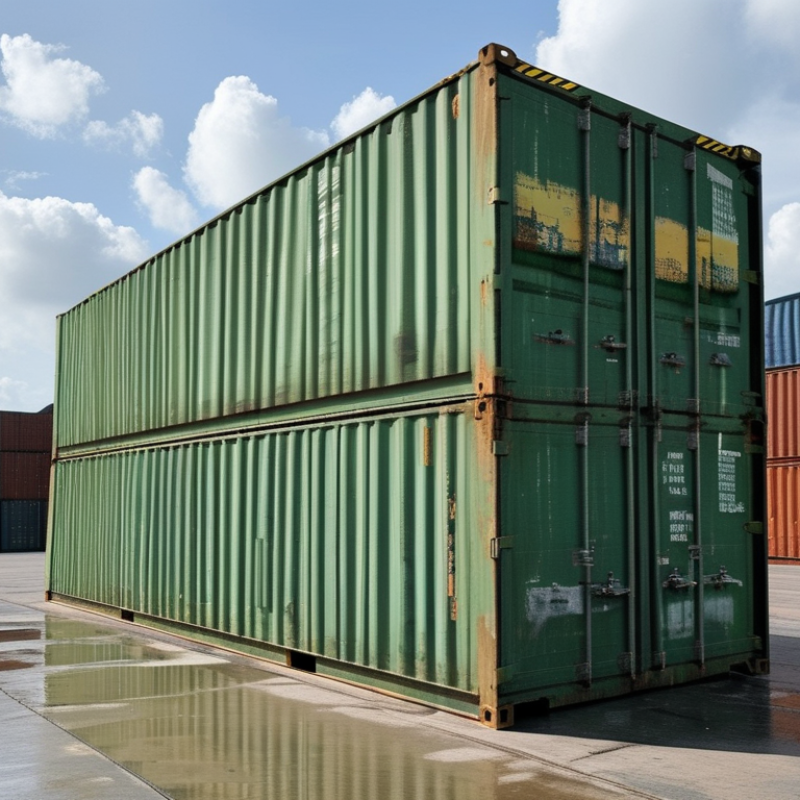
For general cargo, a dry container is usually the practical starting point. A 20-foot container holds about 33 m³, while a 40-foot container holds about 67 m³. These figures describe internal volume, not usable space. Doors, corner posts, pallets, and protective gaps reduce the real capacity. Cartons may fit on paper but fail during loading.
I have found the 20-foot size useful for dense cargo, such as machinery parts, packaged hardware, or boxed materials. Its shorter floor limits volume, yet its payload capacity can suit heavy shipments. A 40-foot container gives more floor length and nearly twice the cubic space. It works better for lightweight cartons, furniture, textiles, and irregular packages. Leave room for safe stacking and airflow.
Measure every package before booking. Record length, width, height, weight, and pallet direction. Check the container’s internal dimensions with the carrier, because specifications can vary slightly. I once planned around total cubic volume and ignored carton shape; several spaces became unusable. That mistake increased handling work. A loading diagram would have helped. Also consider the delivery site. A longer container needs enough turning space and a stable unloading area. Choose capacity from the cargo’s actual shape, weight, and handling method, not volume alone.
How to Choose the Right Freight Container for Shipping? – Choose Dry Containers
| Container Type |
External Size
(L × W × H) |
Internal Size
(L × W × H) |
Approx. Capacity |
Typical Payload* |
Best For |
Key Considerations |
| 20-Foot Standard Dry Container |
6.06 × 2.44 × 2.59 m
20 × 8 × 8.5 ft |
5.90 × 2.35 × 2.39 m
19.4 × 7.7 × 7.9 ft |
About 33 m³
1,170 ft³ |
Approximately 28,000 kg
61,700 lb |
Compact, heavy cargo such as machinery, metal products, packaged materials and dense goods. |
Usually offers better payload efficiency for heavy shipments. Cargo must fit through a door opening of approximately 2.34 × 2.28 m. |
| 40-Foot Standard Dry Container |
12.19 × 2.44 × 2.59 m
40 × 8 × 8.5 ft |
12.03 × 2.35 × 2.39 m
39.5 × 7.7 × 7.9 ft |
About 67 m³
2,366 ft³ |
Approximately 26,000–28,000 kg
57,300–61,700 lb |
Large volumes of cartons, furniture, consumer goods, textiles and palletized cargo. |
Provides roughly twice the internal volume of a 20-foot container, but the maximum gross weight is generally similar, so it is better for lighter, higher-volume cargo. |
| 40-Foot High Cube Dry Container |
12.19 × 2.44 × 2.90 m
40 × 8 × 9.5 ft |
12.03 × 2.35 × 2.70 m
39.5 × 7.7 × 8.9 ft |
About 76 m³
2,684 ft³ |
Approximately 26,000–28,000 kg
57,300–61,700 lb |
Bulky or tall cargo, lightweight packaged goods and shipments requiring extra vertical clearance. |
Offers approximately 30 cm more internal height than a standard container. Confirm route, terminal and equipment availability before booking. |
Select Reefers, Open-Tops, Flat Racks, or Tanks for Specialized Cargo
Choosing a freight container starts with cargo behavior, not only exterior measurements. In field planning, I check temperature, loading height, weight distribution, and handling points before requesting a rate. A container may fit on paper and still fail at the terminal. That lesson is easy to underestimate.
Reefers suit chilled or frozen cargo needing stable temperatures. Confirm the product’s set point, ventilation needs, and allowable temperature range. Pre-cool the unit when procedures require it. Place cartons with air channels around the load. Do not block floor grooves or the return-air path. Record product temperatures, not just the display reading. A reefer protects temperature, but it cannot repair warm cargo loaded too late. My earlier mistake was treating the machine as a guarantee. It is only one part of control.
Open-tops help with tall machinery loaded by crane. Check whether the cover can withstand rain, lifting, and inspection. Flat racks handle wide or heavy machinery, but lashing points, center of gravity, and overhang measurements need written approval. Tanks suit compatible liquids and require verified capacity, cleanliness, valves, and pressure controls. Use trained inspectors and current cargo data. A rough sketch is not enough. Measure twice. Before booking, compare gross weight, route equipment, and terminal lifting limits. Small omissions become expensive delays.
Typical 20-Foot Specialized Container Dimensions
Open-top and tank containers typically provide the greatest usable length among these 20-foot formats. Reefers sacrifice some internal space for insulation and temperature-control equipment, while flat racks provide a reinforced platform for oversized or heavy cargo rather than an enclosed volume. Actual dimensions vary by container design and operating standard, so specifications should be confirmed before booking.