

Is Your Container Ready?
Get In Contact With Us Today
Is Your Container Ready?
Get In Contact With Us Today
How to Efficiently Ship a Container Overseas?
Efficiently shipping a container overseas requires careful planning. Many factors can influence the process. You must consider costs, routes, and timing.
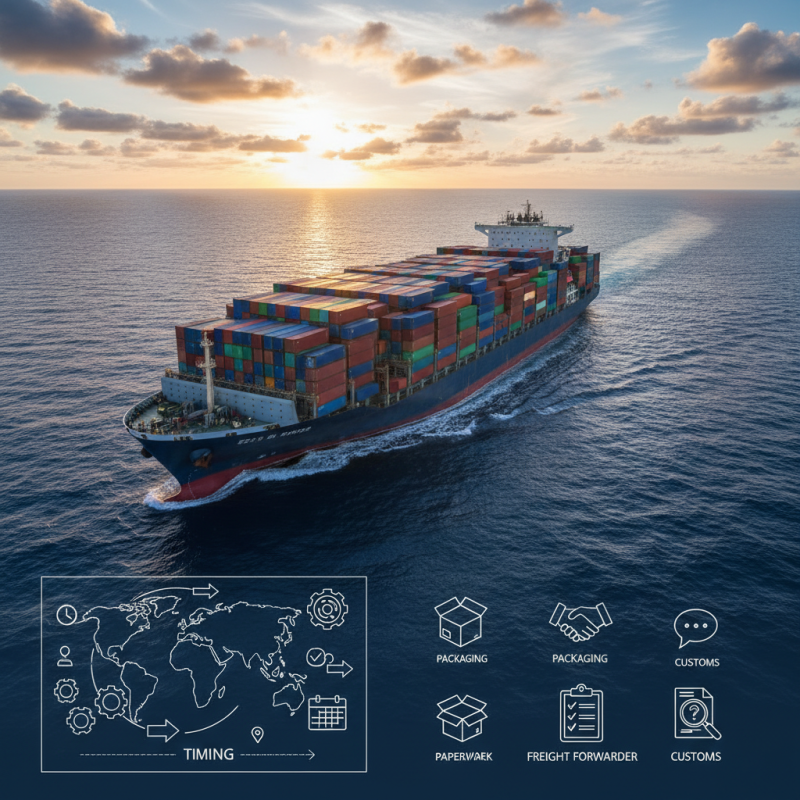
Shipping a container isn't as straightforward as it seems. Each shipment presents unique challenges. For example, inadequate packaging can lead to damage. Choosing the right freight forwarder is crucial. They can help navigate regulations and paperwork.
Effective communication is key during shipping a container. Delays can happen, so it's important to stay in touch with all parties involved. Sometimes, shipments arrive late or get held up at customs. Reflecting on these details can save time and money in the future. Shipping a container overseas demands attention to detail and proactive management.
Understanding the Basics of Container Shipping
Understanding the basics of container shipping is crucial for anyone involved in international trade. Shipping a container overseas may seem straightforward, but it involves multiple steps. First, you need to select a suitable shipping method. Options include full container load (FCL) and less than container load (LCL). Each has its benefits and costs. FCL is ideal for larger shipments, while LCL can save money on smaller ones.
Next, documentation is vital. You'll require a bill of lading, commercial invoice, and packing list. Missing or incorrect paperwork can cause delays or extra fees. Many overlook this aspect. It's a common pitfall that can lead to frustration. You should also monitor shipping schedules and transit times. Shipping routes can change unexpectedly. This complexity requires constant attention.
Finally, don't forget about customs regulations. Different countries have distinct rules for imports. Ignoring these might lead to confiscation or fines. Stay informed about the destination country's requirements. It’s a challenging but essential process for successful shipping. Mistakes can be costly, so double-check everything. Being thorough here will lead to smoother transactions in the future.
Choosing the Right Shipping Method for Your Needs
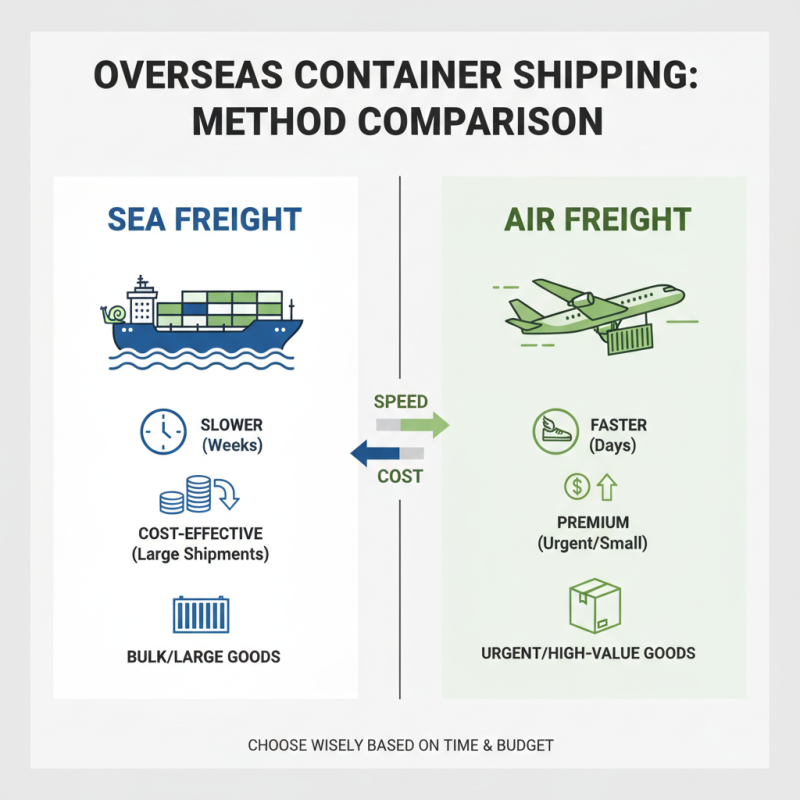
When it comes to shipping a container overseas, selecting the right method can save time and money. There are various options available, such as sea freight and air freight. Each option suits different needs. Sea freight is generally more cost-effective for larger shipments, but it may take longer. On the other hand, air freight is faster and ideal for urgent deliveries.
Tips: Assess your shipment size and urgency before deciding. If you have bulky goods, sea freight is usually the best bet. However, if you need items quickly, air freight might be necessary, even if it costs more. Be mindful of hidden fees in both methods.
Sometimes, choosing the right shipping method involves trade-offs. You may want speed and affordability, but that’s often not feasible. Reflect on your priorities. If you're unfamiliar with international shipping, consider seeking expert advice. Mistakes can be costly, and delays might disrupt your plans.
Tips: Always check for reliability and customer reviews. A cheap option might lead to problems. It's crucial to communicate your needs clearly for a smoother shipping experience.
Preparing Your Container for International Transport
Preparing your container for international transport requires careful planning and attention to detail. Start by assessing the items you plan to ship. Make sure everything is packed securely. Use sturdy boxes and cushioning materials. This will help protect your goods during transit. Label each box clearly to avoid confusion at the destination. Consider the weight and size of your cargo. Overloading can lead to issues during shipment.
Next, focus on compliance with international shipping regulations. Research the necessary documentation needed for your cargo. Different countries have different requirements. Missing paperwork can cause delays. Double-check that you meet all customs regulations. This might involve declaring the contents accurately. Consider hiring a professional in logistics if you feel overwhelmed. Even small details can become significant problems later on.
Lastly, think about the condition of your container. Ensure it is watertight and free of pests. A dirty or damaged container can be rejected at ports. Take the time to inspect it thoroughly. Make adjustments as needed, even if it’s a minor issue. A proactive approach saves time and reduces stress. While it can be tedious, preparation is crucial for a smoother shipping experience.
Navigating Customs Regulations for Overseas Shipping
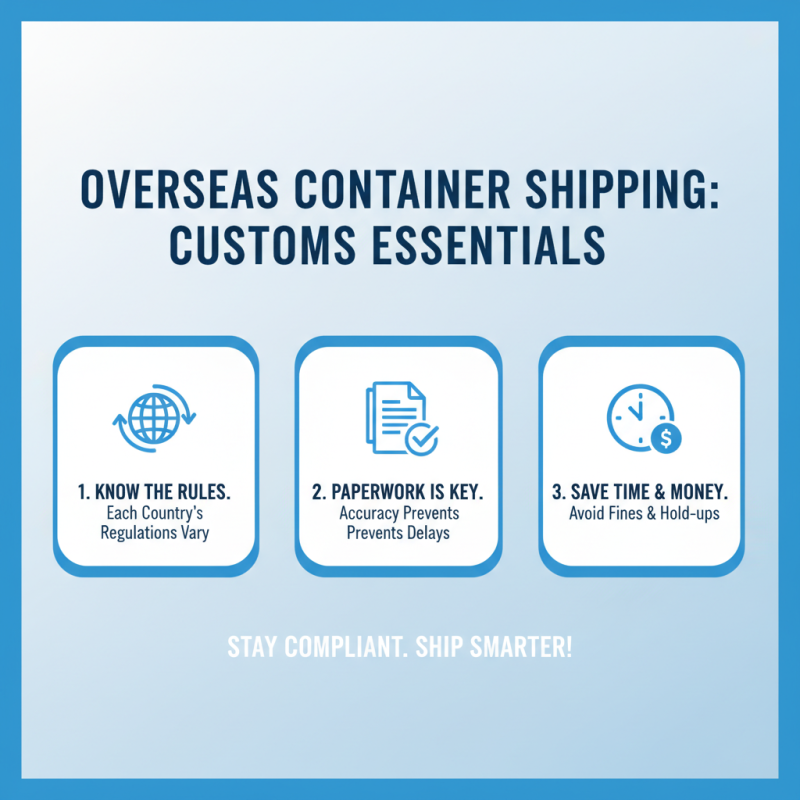
When shipping a container overseas, understanding customs regulations is vital. Each country has its own rules. Familiarizing yourself with these can save time and money. Paperwork is your friend. Ensure that all documents are completed accurately. Missing or incorrect information can cause delays.
Tips: Always double-check your shipping invoices. Incorrect values can lead to fines. Contact local customs offices for guidance. They can provide valuable insights on regulations specific to your destination.
Be mindful of prohibited items. Even items that seem harmless may be banned in other countries. It’s frustrating to find your shipment delayed or returned. Detailed packing lists can help clarify what you are sending. Keep records organized. This can ease the process if issues arise.
Tips: Use clear descriptions for each item. Vague terms can lead to misunderstandings. Consider consulting a customs broker for complex shipments. Their expertise can help navigate tricky regulations.
Tracking Your Shipment and Managing Delivery Timelines
Tracking your shipment is crucial for managing delivery timelines effectively. According to a recent industry report, around 25% of shipments experience delays. This statistic highlights the need for a reliable tracking system. Use technology that allows real-time updates. This can help you identify potential delays early. Awareness can lead to quick decisions on re-routing or notifying customers.
Managing delivery timelines also requires accurate documentation. Issues with paperwork can cause unexpected holds at customs. Reports indicate that improper documentation leads to 30% of shipping delays. Double-check your paperwork before shipping. Ensure that all necessary documents are ready and accurately filled out. This attention to detail can save you time and avoid headaches. Implementing proactive communication with your shipping partner is key. This allows you to address issues as they arise rather than after they occur.
Efficient shipment management should involve reviewing performance metrics. Tracking the average transit time for your shipments is essential. Industry standards show that a good transit time is under 10 days for international shipments. Analyze your shipping history. Look for patterns in delays. This data can be invaluable for improving future shipments. Identifying weak points in your process might lead to better decisions down the line.
Related Posts
-
How to Effectively Ship Goods via Container: A Complete Guide
-
How to Ship Goods via Container in 2025 for Maximum Efficiency and Cost Savings
-
2026 Best Tips to Send Container Safely and Efficiently?
-

Top Benefits of Using Refurbished Container for Your Storage Solutions?
-
What is an LCL Container and How Does it Work?
-
How Much Does It Cost to Buy 20 Shipping Containers in 2025?