Is Your Container Ready?

Get In Contact With Us Today

Is Your Container Ready?

Get In Contact With Us Today

China Top Quadricycle Bike Manufacturers for Global Buyers

China has become a serious production base for the emerging Quadricycle Bike market. Its factories combine frame welding, battery integration, motor assembly, and export packaging under one supply chain. Buyers can therefore compare complete vehicles, not only individual components.

The market deserves careful interpretation. The International Energy Agency reported nearly 14 million electric car sales worldwide in 2023, with China representing about 60% of global sales (IEA, Global EV Outlook 2024). That figure does not measure Quadricycle Bike demand directly. However, it shows China’s manufacturing depth in electric mobility. Grand View Research also identifies continued growth in global electric bicycle demand, driven by urban travel, delivery services, and low-emission transport. The boundaries remain blurry.

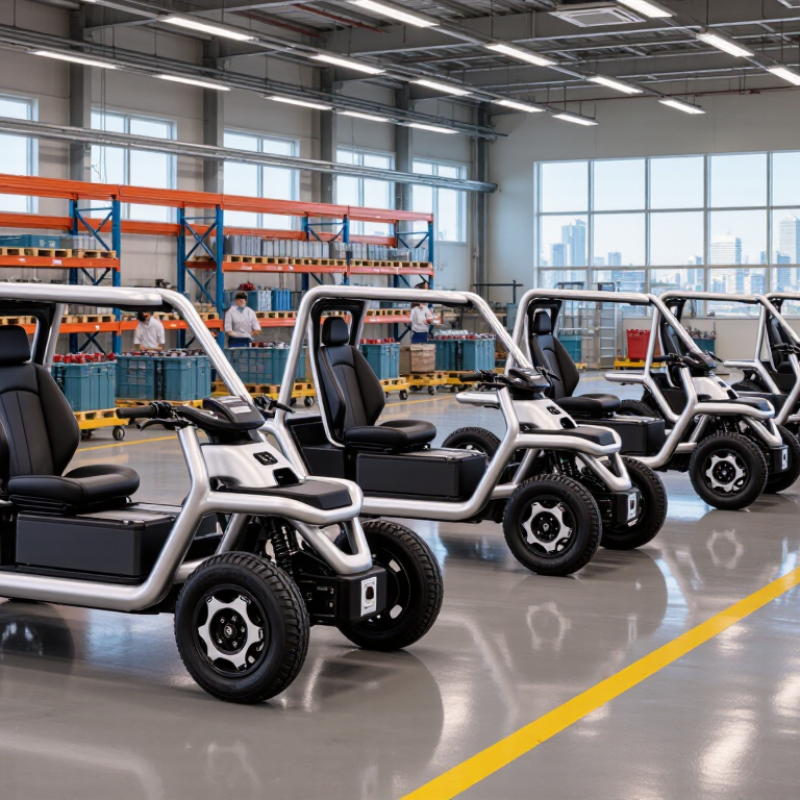
Micromobility analyst Horace Dediu has described micromobility as “transportation using lightweight vehicles for short distances.” A Quadricycle Bike extends that idea with four wheels, greater stability, and useful space for cargo or passengers. In a factory showroom, the differences are visible: welded corner joints, sealed battery cases, brake-cable routing, and the thickness of the floor panel all reveal production quality.

Global buyers should inspect more than attractive prices. They need test records, battery certifications, spare-parts planning, weather protection, and documented quality control. ISO 9001 certification helps, but it never replaces factory inspection. That gap matters.

This guide examines China’s leading Quadricycle Bike manufacturers through product capability, export experience, customization, after-sales support, and compliance readiness. Some market data remains incomplete. That is uncomfortable, but honest comparison is better than inflated certainty.

China Top Quadricycle Bike Manufacturers for Global Buyers

Quadricycle Bike Definitions: Four Wheels, Cargo Capacity, and Use Cases

A quadricycle bike is a pedal-assisted or electric vehicle with four wheels, a stable frame, and useful space for people or goods. It is not simply a bicycle with two extra wheels. Under EU Regulation 168/2013, light quadricycles can reach 45 km/h, while heavier categories allow higher power and greater mass. Cargo limits depend on structure, brakes, battery placement, and local approval rules.

The boundary is not perfectly clean. Some models operate like bicycles, while others resemble compact utility vehicles. CONEBI’s 2024 European market report recorded about 11.7 million bicycles sold across Europe in 2023, showing a substantial base for practical cycling products. However, quadricycle bikes remain a specialized segment. Their strongest use cases include campus transport, resort services, municipal maintenance, and short-distance delivery. A long rear box can carry parcels, tools, or fresh food. Low decks help workers load heavy items without lifting above waist height.

Real cargo performance needs careful testing. A claimed 300-kilogram capacity may require level roads, balanced loading, and frequent brake checks. That is often overlooked. The International Transport Forum has identified urban last-mile delivery as a major efficiency challenge, especially where congestion increases operating costs. Four wheels improve low-speed stability, but they also increase width and turning radius. Buyers should measure gates, cycle lanes, storage rooms, and loading zones before ordering. Small details matter.

Quadricycle Bike Definitions: Four Wheels, Cargo Capacity, and Use Cases

Quadricycles are compact four-wheel vehicles classified in the European Union by vehicle mass, speed, power, and intended use. The chart compares the maximum permitted vehicle mass for passenger and cargo-oriented categories.

L6e Light Quadricycle

Four wheels, maximum design speed of 45 km/h, and a maximum permitted mass of 425 kg. Typical uses include urban mobility, campus transport, and light last-mile delivery.

L7e Heavy Quadricycle

Four wheels, up to 15 kW net power, with a maximum permitted mass of 450 kg for passenger versions or 600 kg for cargo versions.

Cargo Capacity Note

Regulations set maximum vehicle mass rather than a universal cargo-volume figure. Actual payload equals the approved maximum mass minus the vehicle’s running mass and occupants.

China’s Manufacturing Base: OEM Scale, Export Markets, and Production Data

China has become a major manufacturing base for quadricycle bikes used in tourism, campus transport, resorts, and short-distance mobility. Its advantage comes from dense supplier networks for frames, batteries, motors, controllers, seats, and lighting systems. Buyers can often source a complete vehicle from one production cluster, reducing coordination time and shipping complexity.

Factory capacity varies widely. A small workshop may complete a few hundred units monthly, while an export-oriented plant can assemble several thousand. However, published production figures need careful review. Some factories report annual capacity, not actual output. Others combine several vehicle categories in one number. Serious buyers should request monthly production records, inspection reports, sample approval documents, and recent shipment evidence.

Export markets commonly include Europe, Southeast Asia, the Middle East, North America, and selected African markets. Product specifications change by destination. Battery certification, braking performance, lighting, charger design, and labeling may require different controls. Container loading also affects cost; knock-down packing can increase units per shipment but may demand stronger assembly management locally.

From factory visits, one practical detail stands out: disciplined quality checks matter more than impressive showroom displays. Inspect weld points, paint thickness, battery protection, and steering alignment. The supply chain is strong, but it is not flawless. Lead times can shift during battery shortages, material price changes, or port congestion. A transparent manufacturer will explain these risks instead of promising unrealistic delivery dates.

Safety and Compliance: ISO 4210, EN 15194, and 250 W E-Bike Limits

China Top Quadricycle Bike Manufacturers for Global Buyers

For global buyers comparing Chinese quadricycle bike manufacturers, compliance begins with product classification, not a brochure claim. A four-wheel pedal vehicle may fall under bicycle, EPAC, cargo cycle, or another category. That distinction changes testing, lighting, braking, documentation, and registration duties. Ask for reports tied to the exact frame and motor configuration. Not a generic certificate.

ISO 4210 offers a recognized framework for bicycle safety, including structural strength, braking, steering, and fatigue testing. It may not fully address the wider chassis and heavier loads of a quadricycle. Request evidence from loaded brake tests, repeated frame cycles, wheel retention checks, and stability assessments. Inspect welds and fasteners. A practical audit should include a fully loaded vehicle on a controlled slope. Record dry and wet braking behavior.

EN 15194 is relevant to electrically assisted cycles in applicable European markets. It commonly limits continuous rated motor power to 250 W and assistance to 25 km/h. The controller should stop assistance smoothly, not merely display a lower speed. Verify markings, battery protection, charger documents, electromagnetic compatibility, and production consistency. One overlooked firmware update can change compliance. A certificate alone never proves safe operation. I would question unclear test dates, untranslated reports, and missing load conditions. Rules vary. Confirm requirements with an independent laboratory or qualified local authority before shipment.

How to Evaluate Manufacturers: MOQ, Certifications, Testing, and Lead Times

When evaluating quadricycle bike manufacturers, start with MOQ, but do not treat it as a discount number. Ask whether the MOQ applies per color, battery option, or complete shipment. A supplier quoting 20 units may require 20 identical configurations. Request a written breakdown for frames, motors, controllers, batteries, and spare parts. Low MOQ can help a pilot order, yet it may increase unit cost or reduce customization.

Certifications should match destination markets and vehicle classification. Ask for current certificates, test reports, and the exact model numbers covered. Verify issuing laboratories independently; a scanned logo is not evidence. Check electrical safety, battery transport documentation, braking performance, lighting, load capacity, and weather resistance. Insist on a pre-shipment inspection and a sample test under real conditions. Ride over uneven pavement, measure stopping distance, and inspect welds after repeated loading. Laboratory results matter, but field behavior can expose weaknesses.

Lead times need more detail than “30 days.” Separate prototype, production, inspection, and shipping schedules. Confirm component availability, especially cells, tires, and controllers. Put tolerance limits and replacement procedures into the contract. Keep a buffer for port delays. A factory may promise quickly and still miss dates during peak seasons. That is not always deception, but it is a planning risk. I would rather accept a slower, documented schedule than trust an optimistic estimate. Recheck every claim before payment.

China Top Quadricycle Bike Manufacturers for Global Buyers - How to Evaluate Manufacturers: MOQ, Certifications, Testing, and Lead Times
Evaluation Dimension Buyer Requirement or Question Practical Benchmark for Screening Documents or Evidence to Verify Risk Signal
Product Definition Is the vehicle a pedal-assist quadricycle, electric quadricycle, cargo model, passenger model, or low-speed vehicle? The supplier should provide a written specification covering seating capacity, payload, dimensions, curb weight, maximum speed, motor rating, and intended road use. Technical data sheet, dimension drawing, product photographs, vehicle classification statement, and configuration list. The product category changes after quotation or the specification uses only vague terms such as “electric bike.”
MOQ Policy What are the minimum quantities for samples, pilot orders, standard production, custom colors, and private-label packaging? A credible quotation separates sample quantity, pilot quantity, standard MOQ, and customization MOQ instead of presenting one blanket figure. Official quotation showing MOQ by configuration, packaging type, color, battery option, and spare-parts requirement. The MOQ is not stated in writing or increases after technical requirements are confirmed.
Sample Availability Can the buyer inspect and test a production-equivalent unit before placing a bulk order? A sample should match the proposed frame, controller, motor, battery type, charger, braking system, and lighting configuration. Sample invoice, serial-number photographs, sample configuration sheet, and pre-shipment inspection checklist. The sample uses upgraded components that are not included in the mass-production quotation.
Quality Management Does the manufacturing site operate a documented quality-control process? The supplier should be able to describe incoming inspection, in-process checks, final inspection, nonconformity handling, and traceability. Valid ISO 9001 certificate, quality manual extract, inspection records, corrective-action examples, and factory-audit report. An ISO certificate is supplied without a verifiable certificate number, scope, or issuing body.
Market Certification Which legal and technical requirements apply in the destination country? Compliance must be assessed by destination market and vehicle classification; CE marking alone does not prove road legality in every European country. Declaration of Conformity where applicable, technical file, risk assessment, test reports, labeling artwork, and market-specific compliance statement. The supplier treats one general certificate as valid for every country and every vehicle configuration.
Battery Safety Can the supplier document the battery cell type, battery-management system, charger, and transport compliance? Lithium battery shipments commonly require UN 38.3 test evidence and transport documentation; battery safety standards such as IEC 62133-2 may be relevant depending on the battery and market. Battery specification, cell documentation, BMS parameters, charger test report, UN 38.3 test summary, and Safety Data Sheet where required. The battery has no traceable cell information, no overcharge protection details, or no transport documentation.
Electrical Testing Are the motor, controller, charger, wiring harness, display, and lighting tested as one complete system? Testing should cover insulation, charging behavior, over-current protection, connector security, water resistance claims, and functional operation under rated load. Electrical test records, wiring diagram, charger specification, ingress-protection test evidence where claimed, and final functional checklist. Only individual components have certificates while the complete vehicle has not been tested.
Brake Performance What braking system is installed, and what load and surface conditions were used for testing? The supplier should provide front and rear brake configuration, brake type, adjustment procedure, rated load, test speed, stopping-distance method, and test result. Brake test report, component specification, inspection record, and photographs of the installed braking system. The supplier provides only a statement such as “high-quality brakes” without test conditions or measurable results.
Frame and Durability How is the chassis validated for payload, vibration, fatigue, corrosion, and repeated use? The supplier should define rated payload and explain structural testing appropriate to the vehicle’s intended use, including cargo or passenger service. Frame material specification, welding inspection records, load-test results, fatigue-test method, corrosion-treatment details, and warranty data. Payload is advertised without a test basis or without distinguishing static load from usable operating payload.
Water and Corrosion Protection What protection is provided for the frame, battery enclosure, connectors, controller, lights, and exposed fasteners? The supplier should state the actual protection level or test method; an unverified “waterproof” claim should not be treated as a technical rating. Ingress-protection test report where applicable, coating specification, material list, drainage design, and outdoor-use inspection procedure. The supplier promises outdoor use but cannot explain drainage, sealing, corrosion treatment, or maintenance requirements.
Production Lead Time What is the lead time from deposit, artwork approval, or purchase-order confirmation to finished goods? Lead time should be quoted separately for samples, standard production, custom production, battery procurement, and peak-season orders. Written production schedule with approval milestones, component availability, inspection date, and shipment-ready date. The lead time starts before artwork, battery specification, or technical configuration has been approved.
Component Availability Are motors, controllers, batteries, tires, brake parts, chargers, and displays available for repeat orders? Critical replacement parts should have defined part numbers, compatible alternatives, and an estimated supply period after the original order. Bill of materials, spare-parts list, component part numbers, supplier continuity statement, and recommended service stock. Parts are identified only by appearance or are changed without buyer approval.
Pre-Shipment Inspection Can the buyer or an independent inspection company verify the goods before balance payment? Inspection should cover quantity, dimensions, labels, accessories, battery voltage, charging, brakes, lights, welds, finish, and packaging. Approved inspection checklist, sampling plan, inspection report, product photographs, and corrective-action records. The supplier refuses independent inspection or requires full payment before any quality verification.
Packaging and Export Readiness Can the units withstand container handling, road transport, and long-distance sea or air freight? Packaging should protect the frame, wheels, controls, lights, battery, and painted surfaces and should include clear handling and identification marks. Packaging drawings, carton dimensions, gross and net weights, loading plan, export labels, and battery shipping documents. Packaging dimensions and weights are unavailable, causing freight quotations and container planning to remain uncertain.
Warranty Terms What is covered, for how long, and how are claims handled across international borders? The warranty should distinguish frame, motor, controller, battery, charger, consumables, labor, freight, and misuse exclusions. Signed warranty policy, claim-response procedure, replacement-parts policy, diagnostic requirements, and historical claim statistics if available. The warranty is described only as “one year” without defining coverage, exclusions, or shipping responsibility.
After-Sales Support Can the supplier provide manuals, wiring diagrams, troubleshooting guidance, and remote technical support? Support materials should be available in English and should identify serviceable parts, fault codes, maintenance intervals, and safe battery procedures. User manual, service manual, parts catalog, diagnostic guide, training material, and response-time commitment. The buyer must rely on verbal instructions because no technical documentation is supplied.
Commercial Transparency Are specifications, Incoterms, payment terms, tooling charges, spare parts, and validity period clearly stated? The quotation should identify the exact configuration, currency, Incoterm, payment schedule, production period, packaging, included accessories, and exclusions. Signed proforma invoice, technical annex, approved artwork, Incoterms reference, and change-control procedure. The price is attractive but excludes batteries, chargers, packaging, testing, tooling, or export-related charges.
Buyer note: Benchmarks in this table are screening guidelines rather than legal certification requirements. Final requirements depend on the vehicle design, battery chemistry, intended use, destination country, road-traffic classification, and shipping method. Always request current, configuration-specific evidence before placing a production order.

Global Buyer Checklist: Pricing, Logistics, Warranty, and After-Sales Support

Buying quadricycle bikes from China requires more than comparing factory prices. Ask for an itemized quotation covering the vehicle, battery, charger, packaging, and export documents. Confirm whether the price is EXW, FOB, or delivered to your port. A low quotation may exclude inland transport or inspection fees. Request production photos and a sample unit before placing a large order. This small step exposes weak welding, uneven paint, or poor wiring.

Logistics planning should match the vehicle’s battery type and destination rules. Ask the supplier for carton dimensions, gross weight, loading capacity, and estimated shipping time. One damaged frame can erase the savings from a cheaper shipment. I once underestimated port handling charges; the mistake affected the real landed cost. Build a buffer for customs delays, replacement parts, and seasonal freight changes. Do not rely on a verbal delivery promise.

Warranty terms need practical detail. Check coverage periods for the motor, controller, battery, frame, and charger separately. Ask who pays return freight and how defective parts are verified. A dependable manufacturer should provide wiring diagrams, repair videos, spare-part lists, and technician guidance. Response time matters. Test it before signing. Some suppliers promise broad support but answer slowly after payment. Keep all terms in the purchase contract, including replacement timelines and compensation for repeated defects.

Article Source:

Call Now Button