


Top Concentric Reducer Fitting Manufacturers Worldwide
Selecting the top Concentric Reducer Fitting manufacturers worldwide requires more than comparing catalogs or factory photographs. These fittings connect larger and smaller pipe sections while maintaining a centered flow path. Their quality affects alignment, stress distribution, installation time, and long-term system performance.
Piping specialist Mohinder L. Nayyar offers a useful engineering principle: “A piping system is only as strong as its weakest component.” This thought guides our comparison. We examine material traceability, dimensional control, welding quality, heat treatment, surface finishing, and pressure-testing practices. We also consider compliance with recognized standards, including ASME B16.9, ASTM material specifications, and project-specific requirements. Standards alone are not enough.
A reliable manufacturer should provide clear inspection records. It should explain tolerances without vague promises. Real factory experience matters. A reducer may look flawless, yet poor forming can create uneven wall thickness near the transition. That detail may remain hidden until installation or service.
This guide reviews leading manufacturers through a practical, evidence-based lens. It considers production capacity, export experience, customization, quality assurance, and technical support. Customer feedback also matters, although it can be incomplete or difficult to verify. No ranking is permanent. Market conditions change, and a smaller producer may outperform a famous supplier on a demanding project.
The right Concentric Reducer Fitting manufacturer is not always the cheapest option. It is the supplier that combines consistent metallurgy, accurate dimensions, responsive communication, and dependable documentation. That balance deserves careful comparison.
Concentric Reducer Fittings: Definition, Types, and Applications
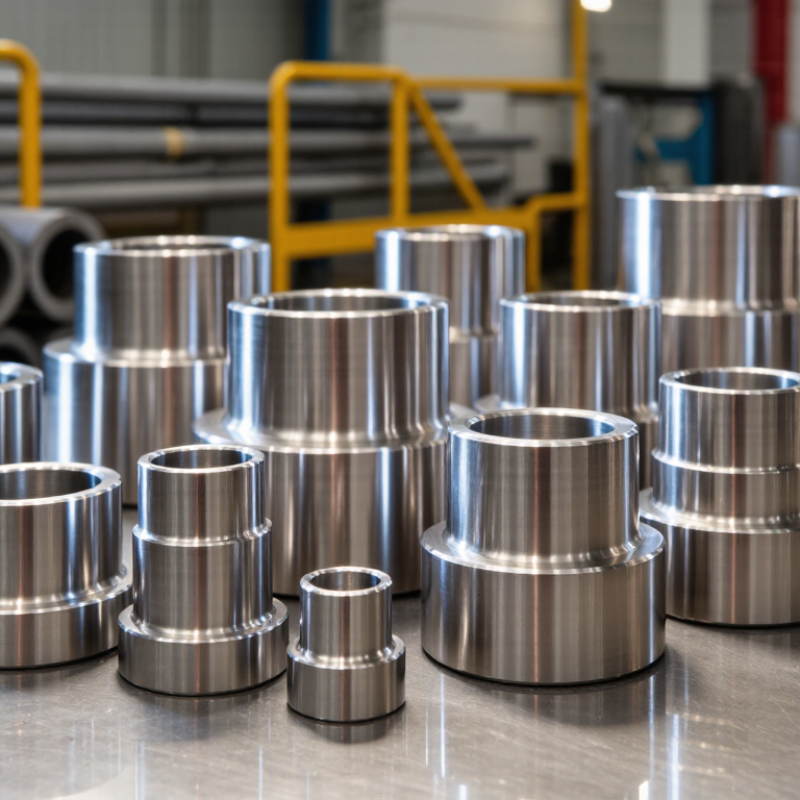
Concentric reducer fittings connect pipes with different diameters along one shared centerline. Their straight, cone-shaped profile helps maintain balanced flow and simplifies alignment. Common types include butt-weld, socket-weld, threaded, and flanged designs. Butt-weld versions suit high-pressure process lines, while threaded models serve smaller, lower-pressure systems.
Material selection depends on temperature, fluid chemistry, and corrosion exposure. Carbon steel remains common in water, energy, and general process piping. Stainless steel supports cleaner service and aggressive fluids. ASME B16.9 provides dimensional requirements for many factory-made butt-weld fittings. Designers should also check ASME B16.5, ISO standards, wall thickness, and pressure ratings. A fitting can look correct and still fail system requirements.
Applications include pump inlets, refinery transfer lines, cooling-water networks, and compressed-air systems. At a pump suction, poor reducer orientation may encourage turbulence and harmful cavitation. The U.S. Energy Information Administration’s 2024 outlook continued to show strong global energy infrastructure demand, supporting ongoing need for reliable piping components. A 2024 Grand View Research assessment also identified industrial piping as a major growth area, driven by water, chemical, and energy projects. These reports indicate opportunity, not guaranteed sales. Manufacturer evaluation should include traceability, heat treatment records, dimensional inspection, and pressure-test evidence. Small details matter. In practice, some projects still specify fittings by price alone, which is a weak habit.
Top Concentric Reducer Fitting Manufacturers Worldwide - Concentric Reducer Fittings: Definition, Types, and Applications
| Data Category | Technical Dimension | Verified Description | Typical Use or Selection Consideration |
|---|---|---|---|
| Definition | Concentric reducer | A butt-welding pipe fitting that connects two different pipe sizes while maintaining a common centerline for both ends. | Used where a symmetrical transition and consistent axial flow path are required. |
| Geometry | Large-end and small-end diameters | The fitting has one larger outside diameter and one smaller outside diameter, with both end axes aligned concentrically. | Suitable for vertical pipe runs, centered equipment connections, and compact symmetric layouts. |
| Size Configuration | NPS × NPS or DN × DN | Common designations identify the nominal size of each end, such as NPS 6 × 4 or DN 150 × DN 100. | The actual outside diameter and wall thickness must be checked against the applicable dimensional standard and pipe schedule. |
| Manufacturing Type | Seamless formed reducer | Produced from seamless tubular material through hot forming, extrusion, pressing, or related forming operations. | Often selected for demanding pressure, temperature, or process-service conditions when a seamless construction is specified. |
| Manufacturing Type | Welded or fabricated reducer | Manufactured from plate, pipe, or formed sections that are longitudinally or circumferentially welded as required by the design. | Common for large diameters, non-standard dimensions, heavy wall thicknesses, or project-specific configurations. |
| Connection Method | Butt-weld ends | The fitting ends are prepared for alignment and welding directly to matching pipe or other butt-welding fittings. | Provides a continuous welded piping system with low external profile and no internal threads. |
| Primary Materials | Carbon steel, stainless steel, and alloy steel | Material selection depends on pressure, temperature, corrosion exposure, fluid compatibility, weldability, and applicable piping rules. | Carbon steel is widely used for general process service; stainless and alloy steels are selected for corrosion resistance or elevated-temperature performance. |
| Dimensional Standard | ASME B16.9 | Covers factory-made wrought butt-welding fittings, including dimensions, tolerances, and related requirements for applicable sizes. | Widely referenced for piping systems designed to ASME and North American engineering practices. |
| European Standard | EN 10253 series | European standards specify requirements for butt-welding pipe fittings, including materials, manufacturing, dimensions, and inspection categories depending on the applicable part. | Appropriate for projects requiring European dimensional and material compliance. |
| Pressure Design | Rating and wall-thickness compatibility | A reducer does not have one universal pressure rating; allowable service depends on material grade, wall thickness, temperature, construction standard, and design code. | Confirm the fitting wall thickness and material against the connected pipe and the governing piping code. |
| Flow Behavior | Centered area transition | The centered conical transition changes flow area along the common axis, generally producing a more balanced geometry than an offset reducer. | Final hydraulic performance depends on taper angle, flow velocity, fluid properties, and the overall piping arrangement. |
| Industrial Application | Oil, gas, petrochemical, and chemical processing | Used to connect process piping with different nominal sizes in hydrocarbon, chemical, utility, and transfer systems. | Material, inspection, welding procedure, and nondestructive examination requirements should follow the project specification. |
| Utility Application | Water treatment, HVAC, and industrial utilities | Used in water, chilled-water, heating-water, compressed-air, and other utility piping where a centered size transition is acceptable. | Corrosion conditions, insulation space, drainage requirements, and maintenance access should be considered during layout. |
| Installation Orientation | Vertical and centered horizontal runs | Concentric reducers are particularly suitable when the pipe centerline must remain unchanged through the transition. | For horizontal liquid lines where drainage or avoidance of liquid accumulation is important, an eccentric reducer may be more suitable. |
| Quality Checks | Dimensions, material, weld quality, and surface condition | Typical verification includes dimensional inspection, material identification, visual examination, and applicable nondestructive testing. | Inspection scope should be defined by the purchase specification, construction code, service severity, and regulatory requirements. |
Note: Nominal sizes, wall thicknesses, end preparations, material grades, tolerances, and inspection requirements must be confirmed against the governing project standard and piping code.