How to Choose the Right Lorry Container for Shipping?
Choosing the right lorry container can protect cargo, control costs, and reduce loading delays. The wrong choice may cause wasted space, unstable stacking, or unexpected handling problems.
A practical decision begins with the cargo. Measure its length, width, height, weight, and packaging strength. A dry container suits boxed goods and palletised products. Temperature-sensitive shipments may require a refrigerated unit with verified temperature records. Oversized machinery could need an open-top or specialised container, subject to carrier approval and route conditions.
The lorry also matters. Check its deck length, axle limits, twist-lock points, and lifting equipment before booking. A container that fits the cargo may still exceed the vehicle’s safe payload. Experienced freight teams compare internal dimensions with real loading plans, not catalogue figures alone. Allow space for doors, ventilation, bracing, and inspection access.
Route conditions deserve equal attention. Narrow yards, low bridges, port restrictions, and poor road surfaces can affect the suitable lorry container. Confirm equipment availability with the carrier, terminal, and qualified transport provider. Their current specifications are more reliable than an old online chart.
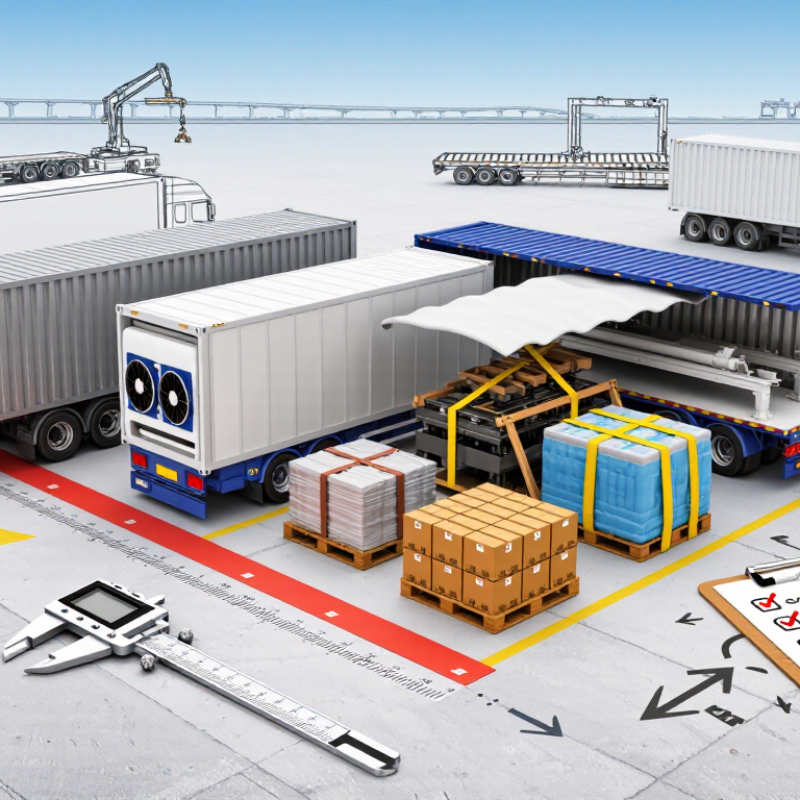
A simple checklist helps.
Yet, it is not perfect. Cargo density can change, packaging may compress, and actual handling space is often smaller than expected. Rechecking measurements before dispatch prevents many avoidable errors. Photographs of the cargo, a scaled loading sketch, and written confirmation of payload limits can improve communication. This guide explains how to compare container types, match them with vehicle capabilities, and make a safer, more informed shipping decision.
Classify Cargo by Type, Volume, Weight, and Temperature Requirements
Choosing the right lorry container starts with cargo classification. UNCTAD’s Review of Maritime Transport 2024 reports that over 80% of global merchandise trade by volume moves by sea. Small selection errors can therefore create large delivery problems. Separate dry goods, liquids, fragile items, oversized cargo, and temperature-sensitive products. A palletized carton load needs different protection from steel coils or powdered materials. Check packaging strength, loading method, and unloading equipment before booking.
Measure actual volume, weight, and weight distribution. Do not rely only on nominal container capacity. A standard 20-foot container usually offers about 33 cubic meters, while a 40-foot unit offers about 67 cubic meters. Payload depends on the container plate, road axle limits, and local operating conditions. Heavy cargo may fit inside but still overload one axle. Place dense goods low and near the center. Use verified gross mass data, as required under IMO container safety practices. The World Bank’s Logistics Performance Index 2023 recorded an average international shipment journey of 44 days, so allow practical time for inspections and handling delays.
Temperature requirements need sharper control. Many vaccines are stored at 2–8°C under WHO guidance, but food, chemicals, and medicines may require different ranges. Pre-cool the cargo and container separately. Install a calibrated data logger near the product, not only beside the door. A reefer set to 4°C can still develop warm spots when airflow is blocked. I have seen loading plans look efficient on paper but fail during unloading. Recheck clearances, ventilation, and temperature records before departure.
How to Choose the Right Lorry Container for Shipping?
Classify cargo by type, volume, weight, and temperature requirements
Use dry containers for general cargo, high-cube containers for bulky lightweight goods,
open-top containers for tall or crane-loaded cargo, and reefer containers for chilled or
frozen products. The figures show typical internal volume and maximum payload under
standard operating conditions; actual limits depend on vehicle regulations, container
specifications, cargo distribution, and route requirements.
Match Cargo Dimensions to ISO 668 Sizes: 20-Foot (33.2 m³) or 40-Foot (67.7 m³)
How to Choose the Right Lorry Container for Shipping?
Choosing a lorry container starts with cargo dimensions, not the vehicle’s appearance. ISO 668 standard sizes provide a practical reference for planning. A 20-foot container offers about 33.2 m³ of internal volume. A 40-foot container provides roughly 67.7 m³. These figures describe usable space, but real loading results can differ.
Measure each pallet, crate, or machine, including packaging and protective supports. Record length, width, height, weight, and handling clearance. A 20-foot container often suits dense, heavy cargo because its floor space is easier to manage. A 40-foot container works better for lighter, bulky shipments that need more volume. Do not choose only by cubic capacity. Door dimensions, axle limits, and cargo distribution also affect the decision.
I once estimated a shipment from volume alone. The calculation looked correct, but two irregular crates blocked the door area. That mistake caused repacking and extra handling. Leave space for safe loading and inspection. Check whether pallets can turn inside the container. Confirm the lorry chassis supports the selected length and gross weight. A partly empty 40-foot container may cost more than a well-packed 20-foot unit. Still, forcing cargo into a smaller box can create damage risks. Measure twice. Then compare the layout with the container’s internal dimensions, door opening, and permitted payload.
Verify 30,480 kg ISO Gross Limits, Chassis Fit, and Local Axle Regulations
Choosing the right lorry container starts with the ISO gross limit. A standard rating may reach 30,480 kg, including the container, cargo, and securing equipment. It is not a guaranteed payload allowance. The container tare weight must be deducted first. Then, check the cargo’s actual weight on a certified weighbridge. Guessing from packing lists can create expensive errors. A small scale discrepancy may become serious at the axle.
Chassis compatibility needs equal attention. Confirm the container length, corner casting positions, twist-lock condition, kingpin arrangement, and fifth-wheel height. Check the chassis plate for its permitted gross weight. Inspect suspension, braking connections, and electrical fittings before loading. A container can meet ISO dimensions yet sit incorrectly on the lorry. This creates movement, uneven loading, or unsafe clearance. Measure it physically when records are incomplete.
Local axle regulations may limit the load below the 30,480 kg ISO figure. Limits can vary by axle group, wheel spacing, road class, and seasonal restrictions. Distribute heavy cargo low and near the permitted load center. Reweigh each axle after securing the doors and equipment. My own checklist once focused too heavily on total weight and missed a rear-axle overload. That mistake changed my process. Now, I compare container data, chassis limits, route rules, and weighbridge results before dispatch. Ask a qualified transport engineer or local authority when the route crosses different jurisdictions.