
Is Your Container Ready?
Get In Contact With Us Today
Is Your Container Ready?
Get In Contact With Us Today
How to Choose a Sideloader Container for Shipping?
Choosing a sideloader container is a practical decision, not a simple equipment purchase. The right unit must match cargo weight, loading space, road access, and handling frequency. A container may look efficient in a catalogue, yet perform poorly beside a narrow warehouse wall.
UNCTAD’s Review of Maritime Transport 2024 reports that maritime shipping carries over 80% of global merchandise trade by volume. That scale makes equipment reliability important. The World Bank’s Logistics Performance Index 2023 also shows how infrastructure quality and shipment timeliness affect supply-chain results. These findings support a careful evaluation of payload limits, lifting reach, chassis condition, and compatibility with local terminals. A 20-foot sideloader container may suit dense urban deliveries. A 40-foot model could reduce handling events for longer cargo. However, larger capacity does not always mean lower total cost.
John Fossey, Drewry’s Head of Container Equipment and Leasing Research, has emphasized, “Equipment selection must reflect cargo needs, operating routes, and lifecycle costs.” That principle deserves attention. Buyers should inspect hydraulic systems, stabilizer legs, twist locks, corrosion points, and maintenance records. Ask for real loading demonstrations, not only specification sheets. Check whether the sideloader can place a container on uneven ground safely. Confirm service support before signing a lease or purchase agreement.
There is no perfect specification.
Even experienced buyers can overestimate utilization. A realistic decision compares purchase price, fuel use, servicing, insurance, downtime, and resale value. This article explains how to choose a sideloader container with evidence, field experience, and a willingness to reconsider attractive but unsuitable options.
Define the Load: Payload, Volume, and Center of Gravity
How to Choose a Sideloader Container for Shipping?
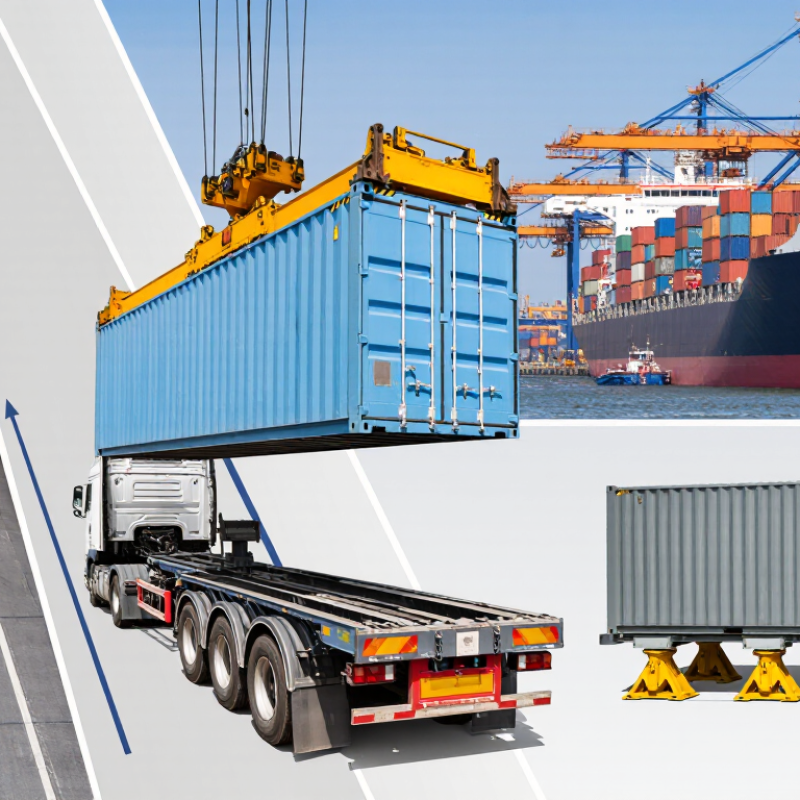
Define the load before comparing container types. Record payload, volume, dimensions, and the center of gravity. ISO 668 standardizes key container dimensions, but it does not guarantee usable internal space. The CSC safety plate remains the controlling reference for maximum gross mass. A 20-foot container may fit the cargo by volume yet fail by axle load or lifting capacity. Measure the cargo, not only the packing list.
Calculate the combined center of gravity after loading. Keep dense items low and near the container’s longitudinal center. Uneven loading can increase trailer instability and sideloader strain. The IMO/ILO/UNECE CTU Code recommends effective weight distribution and cargo securing inside transport units. SOLAS verified gross mass rules also require accurate container weight before ocean shipment. Small errors matter. A scale reading is better than an estimate.
Check the sideloader’s rated capacity at the actual lifting radius. Capacity often decreases as the container moves farther from the chassis. Confirm ground conditions, door clearance, and the required placement distance. The World Shipping Council’s Containers Lost at Sea 2024 Update recorded 576 containers lost in 2023, out of roughly 221 million transported. That figure is small, but it shows why loading discipline matters. I would also leave a practical margin below the limit. Perfect calculations can still miss shifting cargo, wet packaging, or a misunderstood center of gravity.
Choose ISO 668 Size: 20-ft (6,058 mm) or 40-ft (12,192 mm)
How to Choose a Sideloader Container for Shipping?
ISO 668 provides the core measurement standard for intermodal containers. A 20-foot unit has a nominal external length of 6,058 millimeters. A 40-foot unit measures 12,192 millimeters. These dimensions help match the container with a sideloader’s lifting frame, chassis, and locking points. The 20-foot option suits compact cargo, shorter routes, and sites with limited turning space. The 40-foot option offers greater loading volume and fewer container moves. More capacity is not always better.
UNCTAD’s Review of Maritime Transport 2024 reports that shipping carries over 80% of global merchandise trade by volume. Standardized container sizes therefore improve transfer efficiency across ports, rail terminals, and trucks. However, ISO length alone does not confirm compatibility. Check the container’s corner casting condition, gross mass rating, and actual internal length. Wall thickness can reduce usable space. Payload also depends on the sideloader’s lifting capacity and axle distribution. A common mistake is choosing a 40-foot container for light but bulky cargo, then discovering the site cannot safely position it. Measurements should be confirmed on the equipment data plate and the container inspection record. The small details matter.
Check the CSC Plate Against Up to 30,480 kg Gross Mass
How to Choose a Sideloader Container for Shipping?
A CSC plate is the first detail to inspect when choosing a sideloader container. It shows the container’s certified maximum gross mass, tare mass, and inspection information. Some units are rated for up to 30,480 kg gross mass. This includes the container and its cargo. Do not treat 30,480 kg as a universal loading target. The actual limit depends on the plate, container condition, chassis, lifting equipment, and route restrictions.
During equipment checks, I look for a clear plate with readable numbers and a valid examination date. I also compare the plate with the container’s physical condition. Bent corner castings, damaged doors, or heavy floor wear deserve attention.
A high gross-mass rating means little if the sideloader cannot safely handle the loaded container. Confirm its lifting capacity, hydraulic reach, ground stability, and compatibility with the container length.
Tips: Photograph the CSC plate before loading. Record tare mass and planned cargo weight separately. Keep a small safety margin below the listed limit. Check axle limits for the planned route, too. I once underestimated handling equipment limits because the container rating looked sufficient. The plate was correct, but the operation still needed a better plan. Practical verification matters more than a single impressive number.
Match Crane Capacity: Cargo Mass Versus a 15,000 kg Lift Rating
Choosing a sideloader container starts with the crane’s real lifting conditions, not its headline rating. A 15,000 kg lift rating usually applies at a specific boom position, lifting radius, and ground condition. It may not apply when the boom reaches across a wide gap. Check the complete load chart before selecting equipment.
Calculate the total lifted mass carefully. Include the container, cargo, spreader, chains, and other lifting gear. A 12,000 kg load can approach the limit after these additions. Keep the center of gravity low and near the lifting points. Uneven cargo can shift suddenly, even when the scale reading looks acceptable. Leave a practical safety margin.
I have seen loading plans fail because teams compared cargo mass with the crane’s maximum number only. That shortcut is risky. Measure the actual distance from the truck to the landing position, then confirm the rating at that distance. Check ground firmness, vehicle stability, and axle loading as well. The container may be within the crane limit but still create an unsafe vehicle setup. Ask for the latest inspection records and operating instructions. Do not rely on memory. A small calculation mistake can become a large mechanical problem. Recheck the figures on site, especially when cargo dimensions or placement change.
How to Choose a Sideloader Container for Shipping?
Match Crane Capacity: Cargo Mass Versus a 15,000 kg Lift Rating
Container tare weights and cargo masses vary by specification. This comparison uses representative ISO container tare weights: approximately 2,300 kg for an empty 20-foot container and 3,800 kg for an empty 40-foot container. The 15,000 kg line represents the sideloader's nominal lift rating.
Keep the complete lifted mass below the rated capacity and confirm the manufacturer's load chart, lifting radius, ground conditions, and securing requirements before operation.
Verify Twistlocks, Ground Clearance, Axle Loads, and Site Access
How to Choose a Sideloader Container for Shipping?
A sideloader must fit the route, not only the container. Check every twistlock before loading. ISO 1161 specifies the dimensions and strength interface for standard freight-container corner castings. Inspect locking pins, handles, welds, and visible deformation. A clean-looking lock can still fail under poor engagement. Confirm all locks reach the fully secured position, then photograph them for the loading record.
Ground clearance needs a loaded-vehicle check. Measure at the lowest chassis point, then repeat over ramps, drainage channels, and driveway crests. Clearance is unforgiving. The 2023 Global Container Port Performance Index assessed 405 ports, showing how varied operating environments can be. A route that works inside a port may fail at a narrow customer entrance. Ask for gate width, turning space, overhead obstructions, surface strength, and unloading-side access before selecting equipment.
Axle loads deserve calculation, not guesswork. FHWA’s Freight Facts and Figures 2023 reports that trucks moved about 12.9 billion tons of freight in the United States during 2021. That scale explains why axle distribution matters at ordinary roads and private sites. Use the container’s verified gross mass, chassis tare, fuel, and accessory weights. Compare each axle group with local limits and the site’s pavement rating. I would also test the proposed configuration on paper and at the actual yard. A spreadsheet can miss a soft shoulder. This is where many otherwise careful plans need revision. Industry guidance from the IMO/ILO/UNECE Code of Practice for Packing Cargo Transport Units supports documented inspections and controlled loading procedures.
| Container Configuration | Typical Gross Mass | Twistlock Requirement | Typical Ground Clearance | Axle-Load Planning | Recommended Site Access | Best-Suited Applications |
|---|---|---|---|---|---|---|
| 20-foot standard dry container | Up to approximately 24,000–30,480 kg, subject to the container plate, cargo, chassis rating, and local road limits. | Four locking points required. Confirm ISO corner-casting engagement, full handle rotation, locking-pin condition, and visual indicators before lifting. |
Usually about 150–250 mm beneath the lowest chassis or equipment component when loaded. | Plan the load across the permitted axle groups. A concentrated cargo load near one end can overload an axle even when total mass is within the rated limit. | Suitable for a relatively compact entrance, provided the vehicle can align squarely with the placement area and maintain a firm, level setup zone. | General cargo, machinery, building materials, and deliveries to smaller commercial or industrial sites. |
| 40-foot standard dry container | Up to approximately 30,480 kg maximum container gross mass in many ISO applications; verify the individual container plate and legal road limit. | Four locking points required. Inspect all corner castings and ensure the sideloader frame is rated for the selected length and gross mass. |
Usually about 150–250 mm, with the lowest point often close to the rear chassis or suspension components. | Greater rear overhang and cargo-position sensitivity require axle calculations before dispatch. Keep the centre of gravity low and within the permitted loading zone. | Requires a wider turning path and more room beside the delivery position than a 20-foot unit. Check overhead obstructions along the complete route. | Full-load shipments, warehouse replenishment, retail distribution, and projects with a prepared unloading area. |
| 40-foot high-cube container | Commonly rated to approximately 30,480 kg maximum gross mass; the payload may be lower because of container tare weight and local road restrictions. | Four ISO-compatible twistlocks. Verify that the lifting equipment has adequate stability and that the container remains within the permitted height envelope during transfer. |
Typically about 150–250 mm at the chassis, but the taller container increases overall transport height. | Use the same axle-group checks as for a standard 40-foot unit, with additional attention to wind exposure, centre of gravity, and uneven ground during side loading. | Requires verified overhead clearance, including cables, tree branches, signs, canopies, and gate structures. A clear height of roughly 4.5 m or more is often needed, but the actual vehicle height must be measured. | High-volume cargo, lightweight packaged goods, furniture, insulation, and cargo requiring additional internal height. |
| 20-foot heavy or dense cargo | Total gross mass may approach the container rating quickly because dense cargo reaches axle or payload limits before the container is full by volume. | Twistlocks alone do not confirm safe loading. Confirm the container rating, floor capacity, cargo restraint, and lifting-frame capacity. |
Normally similar to a standard 20-foot container, but suspension compression can reduce clearance when heavily loaded. | Highest axle-load risk. Calculate gross mass, axle distribution, kingpin load, and any local bridge-formula restrictions before travel. |
Requires a firm, level unloading area capable of supporting concentrated outrigger and chassis loads without settlement. | Steel products, stone, compact machinery, and other high-density cargo where total mass is more important than volume. |
| Refrigerated container | Often up to approximately 30,480 kg gross mass, but the available payload is reduced by the heavier insulated body and refrigeration equipment. | Use all specified locking points. Protect the refrigeration unit, power connection, air vents, and control panel during lifting and positioning. |
Typically about 150–250 mm, subject to chassis suspension and the equipment location beneath the container. | Check the heavier tare mass, axle distribution, power-unit clearance, and any uneven loading caused by pallet placement. | Needs adequate clearance around the refrigeration unit, access to electrical supply where required, and a level placement surface for stable operation. | Temperature-controlled food, pharmaceuticals, flowers, and other perishable or temperature-sensitive goods. |
| Open-top or platform-type container | Gross mass varies widely; confirm the container plate, cargo securing arrangement, and the lifting equipment's certified working load. | Check non-standard fittings carefully. Confirm that all corner castings are undamaged and that the sideloader's twistlocks are compatible with the container design. |
Usually about 150–250 mm, although irregular or over-height cargo may reduce practical clearance. | Verify longitudinal and lateral centre of gravity, lashing forces, axle distribution, and the effect of any cargo projecting beyond the standard envelope. | Requires a clear side-loading zone and sufficient overhead space for irregular cargo, slings, tarpaulins, or removable top structures. | Construction equipment, timber, scrap metal, oversized machinery, and cargo that cannot be loaded through standard doors. |
| Empty container repositioning | Approximately 2,200–4,500 kg for many 20-foot units and 3,700–5,000 kg for many 40-foot units, depending on construction and equipment. | All twistlocks must still be fully engaged. An empty container can move or lift unexpectedly if locks, doors, or corner castings are not secured. |
Often close to the unladen chassis clearance, commonly about 180–300 mm. | Axle loads are lower, but wind sensitivity and load movement remain important, especially with a tall or lightly secured container. | Generally easier to access than a loaded unit, but the vehicle still needs a firm setup area, adequate turning space, and unobstructed side clearance. | Depot transfers, storage-yard movements, temporary site offices, and container fleet repositioning. |
| Restricted-access delivery site | Select the smallest container and lowest practical gross mass that meets the cargo requirement. | Use only equipment whose locking system can be checked safely from ground level or by an approved inspection procedure. | Confirm the minimum clearance at ramps, road crowns, drainage channels, speed humps, and uneven shoulders; do not rely on nominal clearance alone. | Obtain the vehicle's axle loads and outrigger reactions from the operator. The ground must support these loads without rutting or tilting. | Measure before booking: entrance width, turning radius, road gradient, overhead height, side-loading width, surface strength, and escape route. | Urban projects, residential developments, narrow industrial yards, construction sites, and locations with limited manoeuvring space. |
| Verification note: Dimensions and mass ranges are typical planning values, not substitutes for the container CSC/safety plate, chassis manufacturer's rating, certified lifting-equipment limits, route restrictions, bridge-formula requirements, or local axle and gross-weight regulations. Before dispatch, verify the actual container dimensions, tare and gross mass, twistlock compatibility, vehicle height, ground clearance, axle loads, outrigger reactions, turning path, overhead clearance, and ground-bearing capacity for the specific shipment. | ||||||
Related Posts
-
China Top Sideloader Container Suppliers for Global Buyers?
-

Top 10 Benefits of Using Refurbished Containers for Your Projects?
-
China Top Steel Container Manufacturers for Global Buyers
-
How to Choose the Right Freight Container for Shipping?
-

How Much Does It Cost to Buy 20 Shipping Containers in 2025?
-
Top Lorry Container Types for Global Shipping?